Category Archives: wire crochet
Of blogs and treasuries
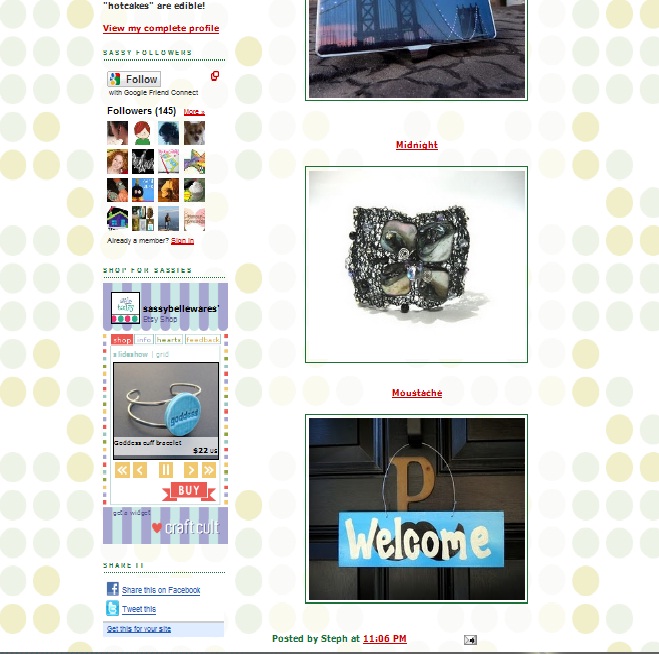
A fellow etsian included my “Midnight” crocheted wire cuff in her blog 🙂
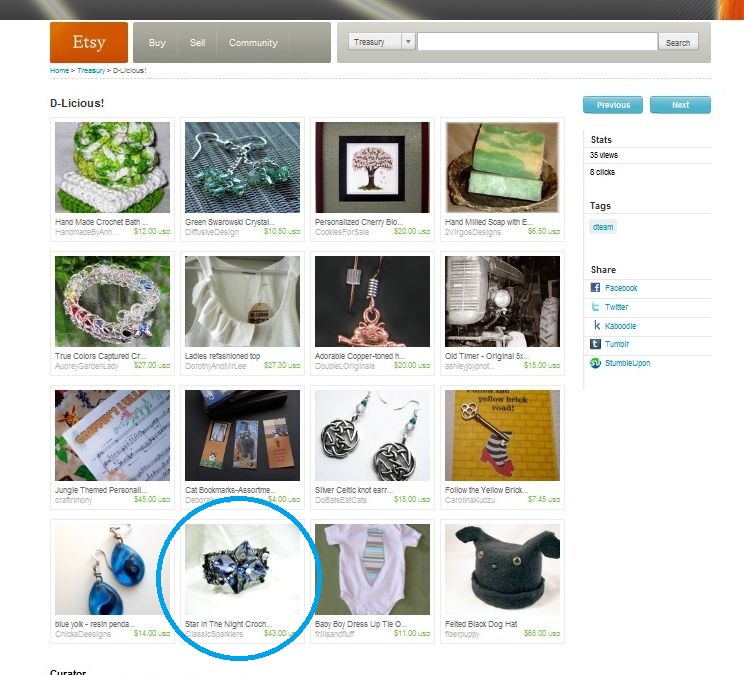
Then another treasury featuring my “Star In The Night” crocheted cuff.
Thank you! Thank you! 🙂
Classic Weddings Part II
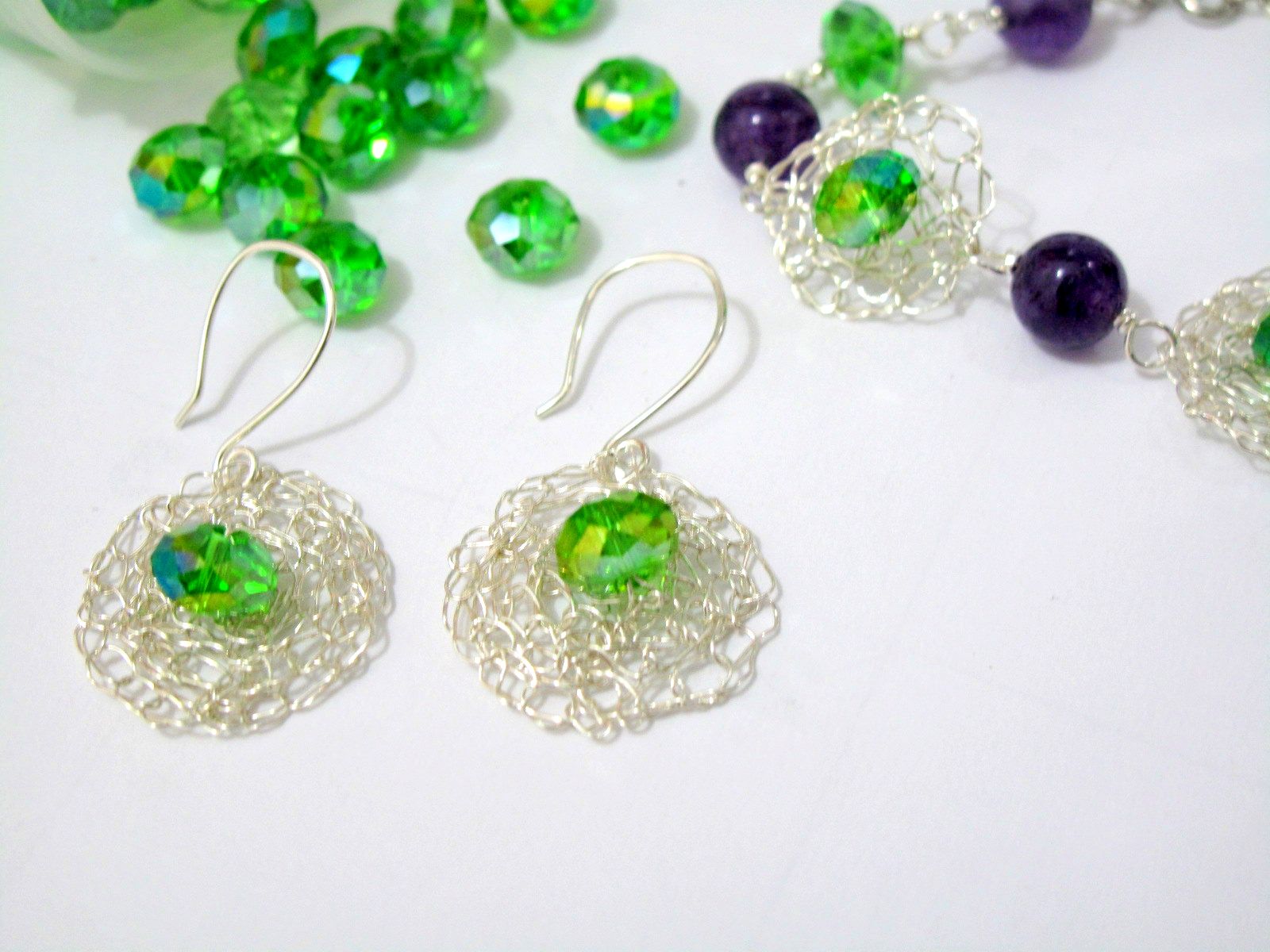
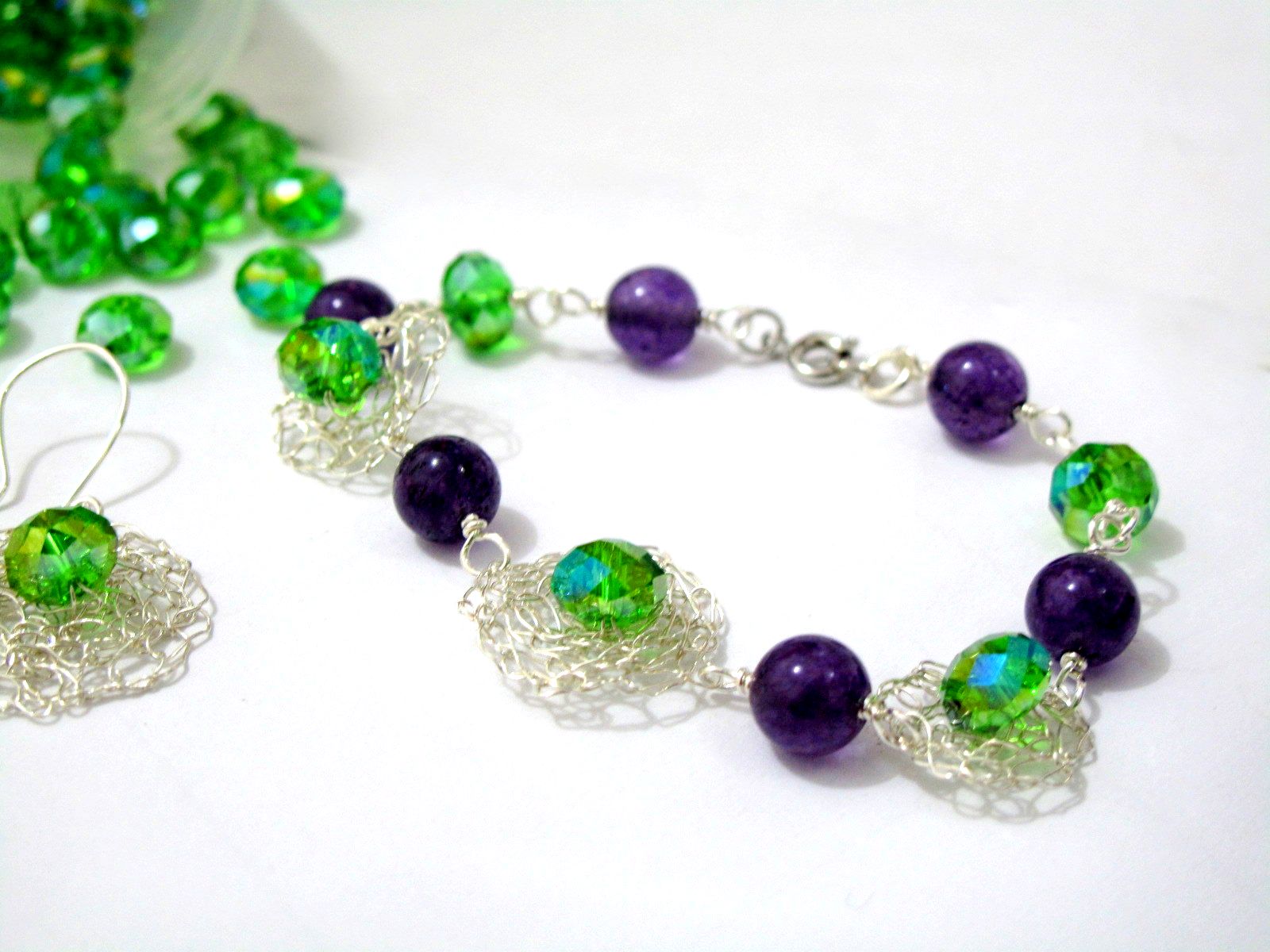
Ashlie requested for a grass-green jewelry set composed of a pair of earrings and bracelet for her 5 bridesmaids. The wedding colors are purple and green. I presented her with this:
THE EARRINGS: Crocheted sterling silver wire formed into discs surrounded by green swarovski crystals with smooth amethyst rondelle in the middle. Size 1 inch in diameter. Dangler earring that is very elegant and organic earrings. Sturdy construction but very lightweight.
BRACELET: Austrian crystals wire wrapped with sterling silver wire.
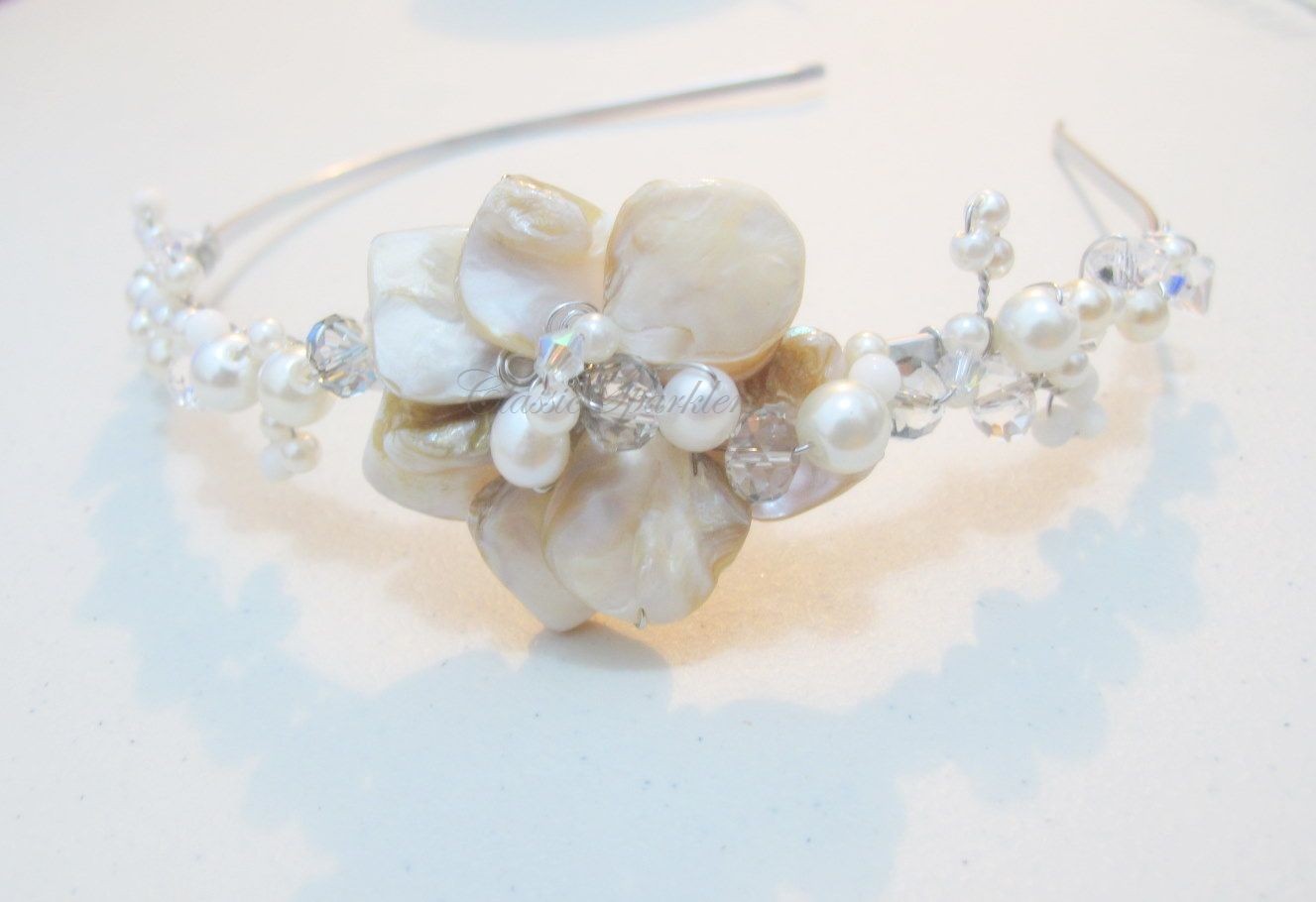
Ashlie loved the idea and request for a bridal headpiece. All she said was that she wanted it white and sparkly.

edit:
Ashlie received the package already!
That’s why I love to experiment!
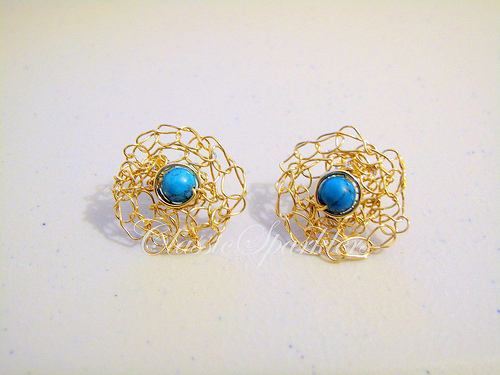
A client wanted something big, but not too big. Round. With turquoise gemstones and definitely not a dangler. Something that can be worn during the day but classy enough for the evening.
A vague description with very little to work with. This is why I do not sketch any of my designs. I love to experiment and I like seeing my imagination run wild. Most of all, I try as much as possible to incorporate my signature designs to the client’s description.
Thus, the final product:
Know your Gold
Yellow Gold
By far the most common color of gold used in jewelry, yellow gold is gold in its natural shade. Yellow gold is usually alloyed with copper and silver to increase the strength of the metal. How yellow the metal is depends upon the content of gold. A 14-karat piece of jewelry will have a brighter yellow hue than a 10-karat piece. Likewise, an 18-karat piece of jewelry will have a deeper yellow than 14-karat gold, and so on.
White Gold
Increasing in popularity in recent years, white gold has become fashionable as the preferred cool and contemporary look. White gold boasts the same properties as classic yellow gold, but achieves its white color by mixing with different alloys. In general, white gold is created when a nickel or palladium alloy (zinc and copper) is used. White gold may also be plated with an even whiter metal, such as rhodium, to enhance its cool appearance. As well, a white gold setting can enhance the rapture of white diamonds.
Rose or Pink Gold
Rose or pink-colored gold can be created by alloying copper with yellow gold. This hue of gold tends to have a pink, bluish tint that complements many skin tones.
Green Gold
This color variation of gold can be created by alloying silver, copper and zinc with yellow gold.
KARATS
Gold’s softness and malleability make it a wonderful metal to work with when creating virtually any design in jewelry. But this softness can be a drawback as well. To make it stronger and more durable, gold is usually alloyed, or mixed, with other metals such as copper or silver. The higher a metal’s percentage of gold content, the softer and more yellow the jewelry piece. The karat weight system used to measure gold in a piece is the same for all hues, including white and yellow gold.
The word “carat” is Arabic, meaning “bean seed.” This is because historically seeds were used to measure weights of gold and precious stones. In the United States, “karat” with a “k” is used to measure gold’s purity, while “carat” with a “c” is used in measuring a gemstone’s size. The karat mark of gold represents the percentage of pure gold to alloy.
24K is pure gold or 100% gold 21K is 21/24ths gold content or 87.5% gold
In the United States, jewelry with this karatage or higher is rare. It is far more common in Europe, the Middle East and Southeast Asia.
18K is 18/24ths gold content or 75% gold
This karatage is a popular high-end choice in the United States, Europe and other regions. Its popularity is spreading throughout North America.
14K is 14/24ths gold content or 58.5% gold
This is the most common gold karatage in the United States because of its fine balance between gold content, durability and affordability.
10K is 10/24ths gold content or 41.7% gold
This karatage is gaining popularity for its affordability and durability. Commonly used in everyday-wear jewelry such as rings, 10K gold beautifully withstands wear and tear. It is the lowest gold content that can be legally marked or sold as gold jewelry in the United States.
Gold Filled, Gold Plated & Vermeil
Alternative types of gold jewelry include gold filled, gold plated and vermeil. Over time, gold plating and vermeil will wear off, requiring re-plating.
Gold plating is an electrolytic process in which a gold coating of at least 10K gold with a minimum thickness is affixed to all surfaces.
Vermeil refers to mechanically bonding or electroplating gold with a minimum fineness of 10K over a base of sterling silver. Gold-filled jewelry consists of a layer of 10K gold or better mechanically bonded to the surfaces of a base (non-precious) metal. This layer of 10K gold must be a minimum of 1/20th of the total metal weight to be called gold filled.
*originally posted here
My winter wonderland
Eversince I received a package of rock crystals in the mail, I’ve imagined all the jewelry designs to have something of a winter-snow effect…..with the glistening whiteness of the crystals, that’s all I could ever think about. So together with my stash of white stones, I decided to come up with a collection which I aptly named: WINTER SONATA.
Here are some of the pieces so far:
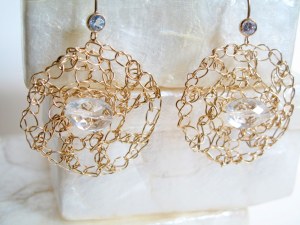 ICICLE EARRINGS
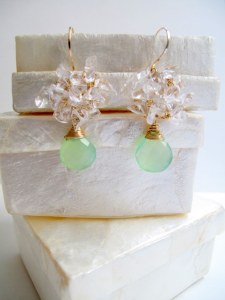 SPRING IN WINTER EARRINGS
Rock crystals are woven around the disc to give the effect of icicles falling from a tree to its leaves.
The leaves are made from faceted apple green chalcedony briolettes (11 carats).
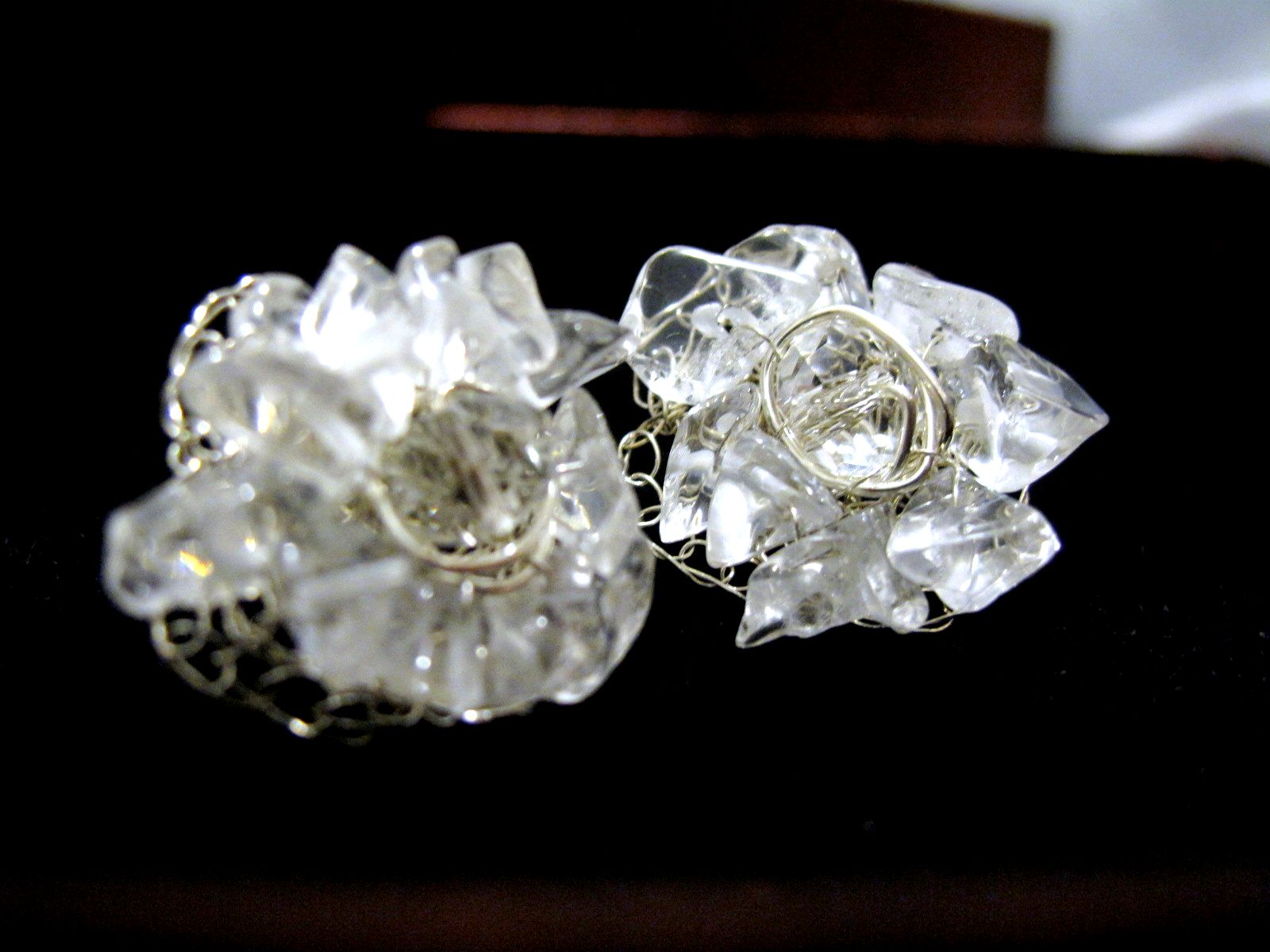 ICEBERG EARRINGS
The name says it all, right? Rock crystal chips are woven in crocheted sterling silver wire.
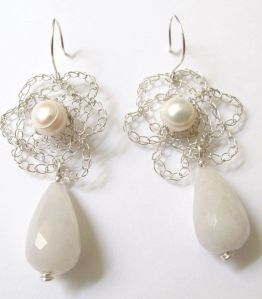 WINTER PRINCESS EARRINGS
A very delicate-looking but sturdy pair of earrings.
Crocheted sterling silver wire formed into a flower from where white faceted jade briolettes hang.
What got me started
It was March 2008. The place where I work prepared a couple of month-long programs to celebrate Women’s Month. One program I attended was an accessory-making seminar. It was just a mere hour long activity which cost each participant Php 1,000 (USD 22) each for the registration and materials. The trainers taught us to make simple stuff like a set of pearl necklace, bracelet and earrings. Then as the saying goes, the rest is history.
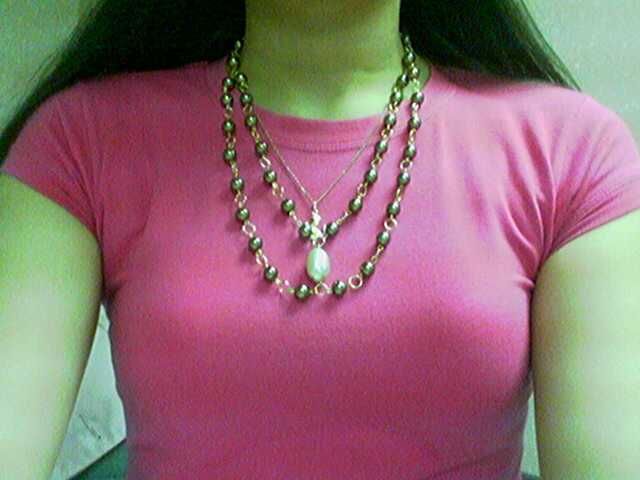
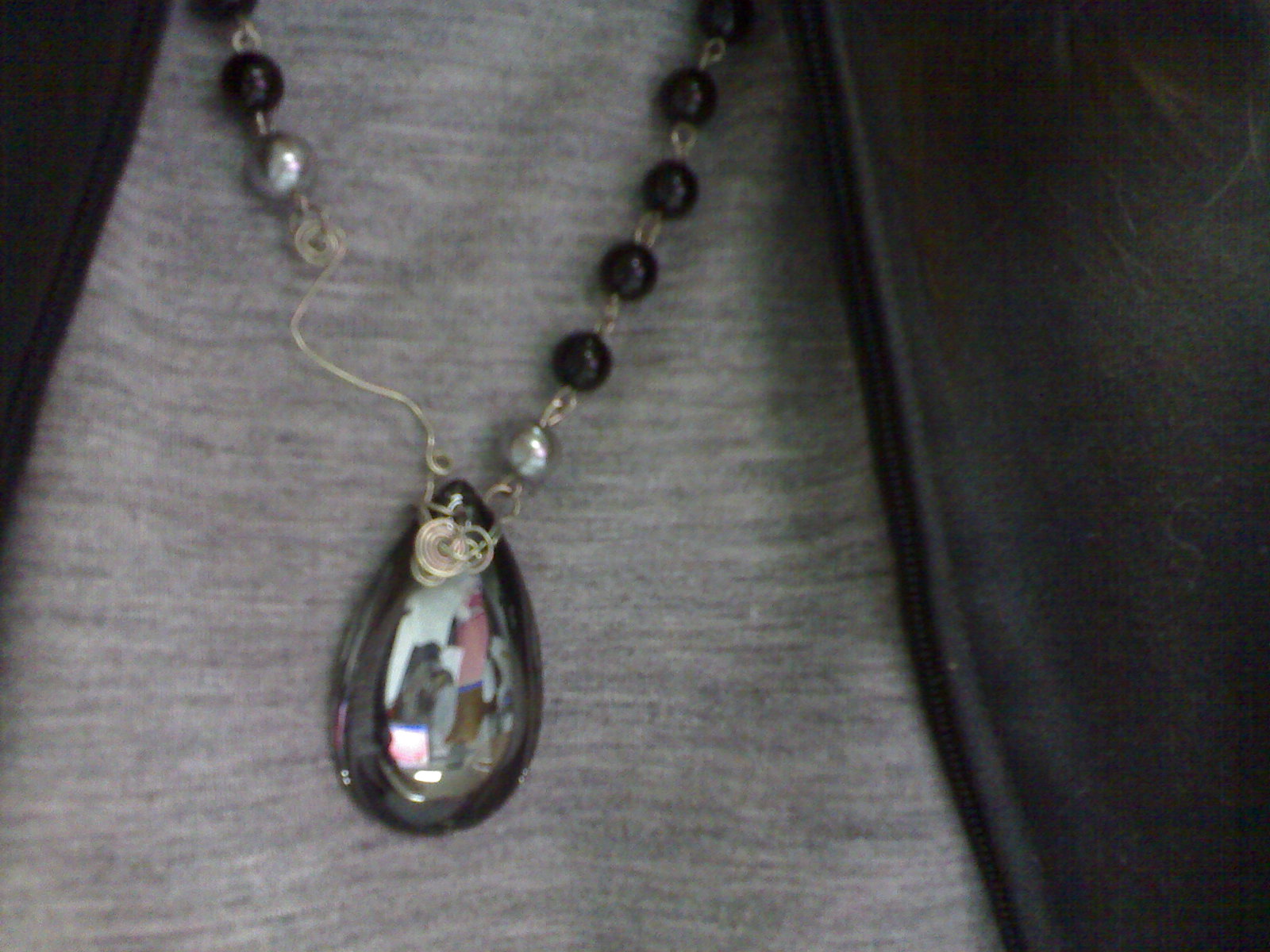
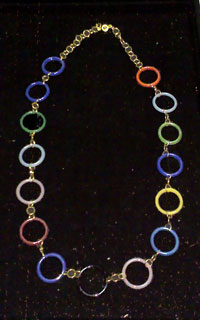
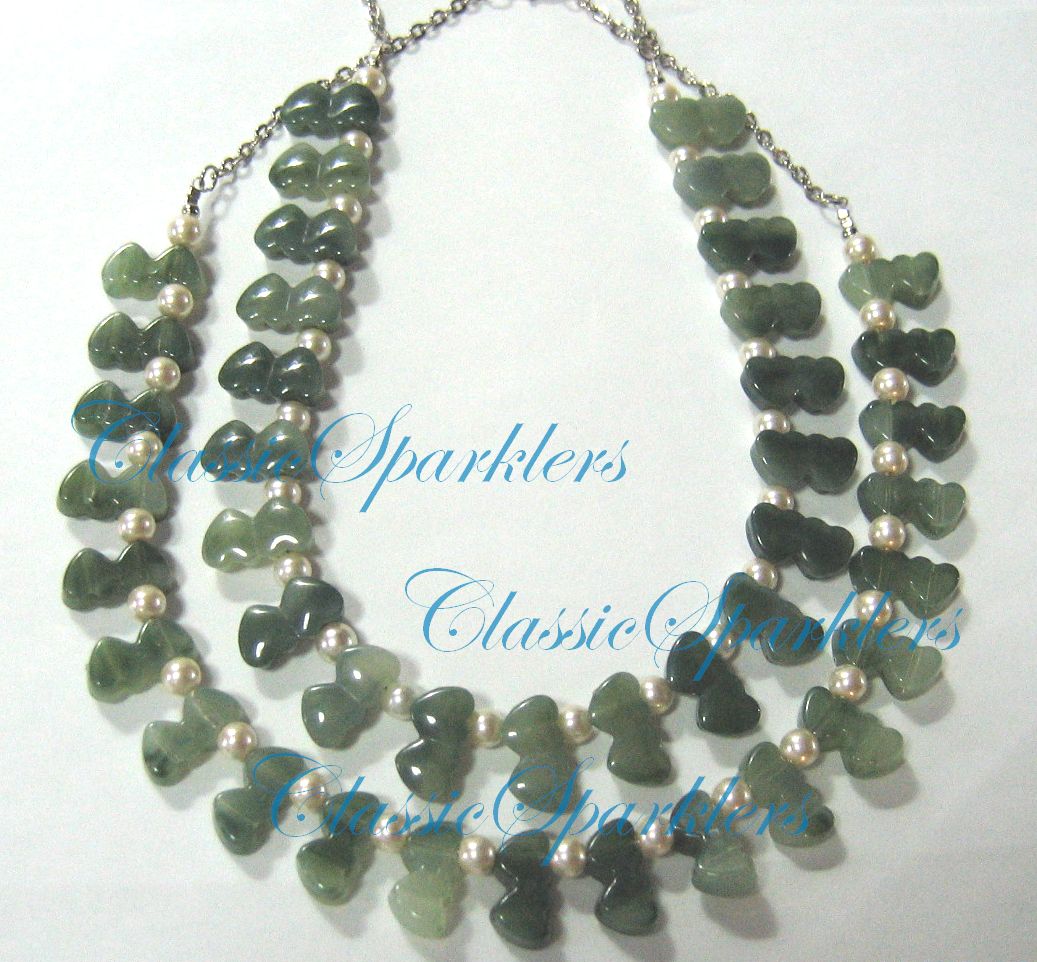
Here are a few of my early projects:



 classicsparklers.com