Alexandrite
While browsing over my supplier’s website last month, I chanced upon a stone she described as “color changing”. It’s name was Alexandrite. The name sounded so mysterious and fascinating! Ever curious, I googled it up and this was what I found out:
This rare gemstone is named after the Russian tsar Alexander II (1818-1881), the very first crystals having been discovered in April 1834 in the emerald mines near the Tokovaya River in the Urals. The discovery was made on the day the future tsar came of age. Although alexandrite is a relatively young gemstone, it certainly has a noble history. Since it shows both red and green, the principal colours of old Imperial Russia, it inevitably became the national stone of tsarist Russia.
Beautiful alexandrite in top quality, however, is very rare indeed and hardly ever used in modern jewellery. In antique Russian jewellery you may come across it with a little luck, since Russian master jewellers loved this stone. Tiffany’s master gemmologist George Frederick Kunz (1856-1932) was also fascinated by alexandrite, and the jeweller’s firm produced some beautiful series of rings and platinum ensembles at the end of the 19th and beginning of the 20th century. Smaller alexandrites were occasionally also used in Victorian jewellery from England.
The magic of changing colours
The most sensational feature about this stone, however, is its surprising ability to change its colour. Green or bluish-green in daylight, alexandrite turns a soft shade of red, purplish-red or raspberry red in incandescent light. This unique optical characteristic makes it one of the most valuable gemstones of all, especially in fine qualities.
Alexandrite is very scarce: this is due to its chemical composition. It is basically a chrysoberyl, a mineral consisting of colourless or yellow transparent chrysoberyl, chrysoberyl cat’s eye and colour-changing alexandrite (also in cat’s eye varieties). It differs from other chrysoberyls in that it not only contains iron and titanium, but also chromium as a major impurity. And it is this very element which accounts for the spectacular colour change. Rarely, vanadium may also play a part. According to CIBJO nomenclature, only chrysoberyls displaying a distinct change of colour may be termed alexandrite.
Of course, with History being one of my major (and favorite) subjects in college, I had to dig out it’s whole history:
The alexandrite variety displays a color change (alexandrite effect) dependent upon the nature of ambient lighting. This color shift is independent of any change of hue with viewing direction through the crystal that would arise from pleochroism. Both these different properties are frequently referred to as “color change”, however. Alexandrite results from small scale replacement of aluminium by chromium ions in the crystal structure, which causes intense absorption of light over a narrow range of wavelengths in the yellow region of the spectrum. Alexandrite from the Ural Mountains in Russia is green by daylight and red by incandescent light. Other varieties of alexandrite may be yellowish or pink in daylight and a columbine or raspberry red by incandescent light. The optimum or “ideal” color change would be fine emerald green to fine purplish red, but this is exceedingly rare. Because of their rarity and the color change capability, “ideal” alexandrite gems are some of the most expensive in the world.
According to a widely popular but controversial story, alexandrite was discovered by the Finnish mineralogist Nils Gustaf Nordenskiöld, (1792–1866) on the tsarevitch Alexander’s sixteenth birthday on April 17, 1834 and named alexandrite in honor of the future Tsar Alexander II of Russia. Sometimes, Nils Gustaf Nordenskiöld is confused with his son, Adolf Erik Nordenskjöld (1832–1901), also a famous Finnish geologist, mineralogist and Arctic explorer who accompanied his father to the Ural Mountains to study the iron and copper mines at Tagilsk in 1853. However, Adolf Erik Nordenskiöld was only two years old when Alexandrite was discovered and only ten years old when a description of the stone was published under the name of Alexandrite for the first time.

Alexandrite step cut cushion, 26.75 cts. Alexandrites this large are extremely rare.
Although it was Nordenskiöld who discovered alexandrite, he could not possibly have discovered and named it on Alexander’s birthday. Nordenskiöld’s initial discovery occurred as a result of an examination of a newly found mineral sample he had received from Perovskii, which he identified as emerald at first. After the discovery of emeralds in the roots of an upturned tree, the first emerald mine had been opened in 1831, not long before Nordenskiöld had received this particular sample.[4]
Confused with the high hardness however, he decided to continue his examinations. Later that evening, while looking at the specimen under candlelight, he was surprised to see that the color of the stone had changed to raspberry-red instead of green. Later, he confirmed the discovery of a new variety of chrysoberyl, and suggested the name “diaphanite”[2] (from the Greek “di-“, twice- and “aphanès”, inapparent[dubious – discuss]).
The name of the first person to actually find this stone is unknown. However, the first person to bring it to public attention, and ensure that it would be forever associated with the Imperial family was Count Lev Alekseevich Perovskii (1792-1856.)[5]
The finest alexandrites up to 5 carats (1,000 mg) are being found in the Ural Mountains, but the largest cut stones are in the 30 carats (6.0 g) range, though many fine examples have been discovered in Sri Lanka (up to 65 cts.), India (Andhra Pradesh), Brazil, Myanmar, and especially Zimbabwe (small stones usually under 1 carat (200 mg) but with intense color change). Overall, stones from any locale over 5 carats (1.0 g) would be considered extremely rare, especially gems with fine color change. Alexandrite is both hard and tough, making it very well suited to wear in jewelry.
The gem has given rise to the adjective “alexandritic”, meaning any transparent gem or material which shows a noted change in color between natural and incandescent light. Some other gem varieties of which alexandritic specimens have been found include sapphire, garnet, and spinel.
Some gemstones described as lab-grown (synthetic) alexandrite are actually corundum laced with trace elements (e.g., vanadium) or color-change spinel and are not actually chrysoberyl. As a result, they would be more accurately described as simulated alexandrite rather than synthetic but are often called Czochralski Alexandrite after the process that grows the crystals. (source)
With all this information in my head, I closed my eyes, took a deep breath, and purchased…….A STRAND!!!!! That’s how impulsive I can get especially when I see things which I think are one of a kind and worth it.
After 3 weeks of waiting, she finally arrived!
This is how she looks next to my other babies (agate, kyanite, quartz):
Can you find it? 🙂

This is what I woke up to this morning:
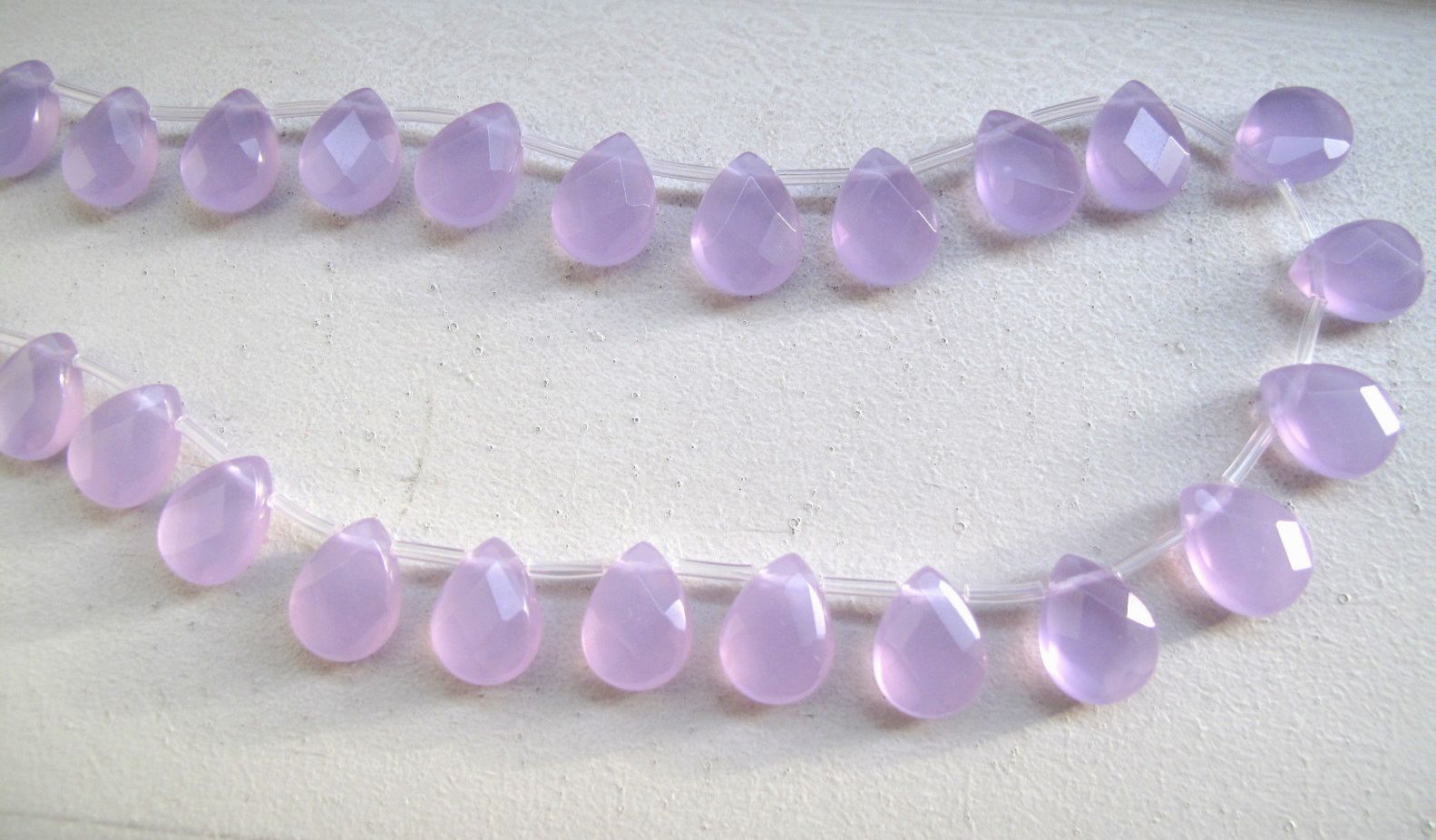
Then with a little change of lighting:
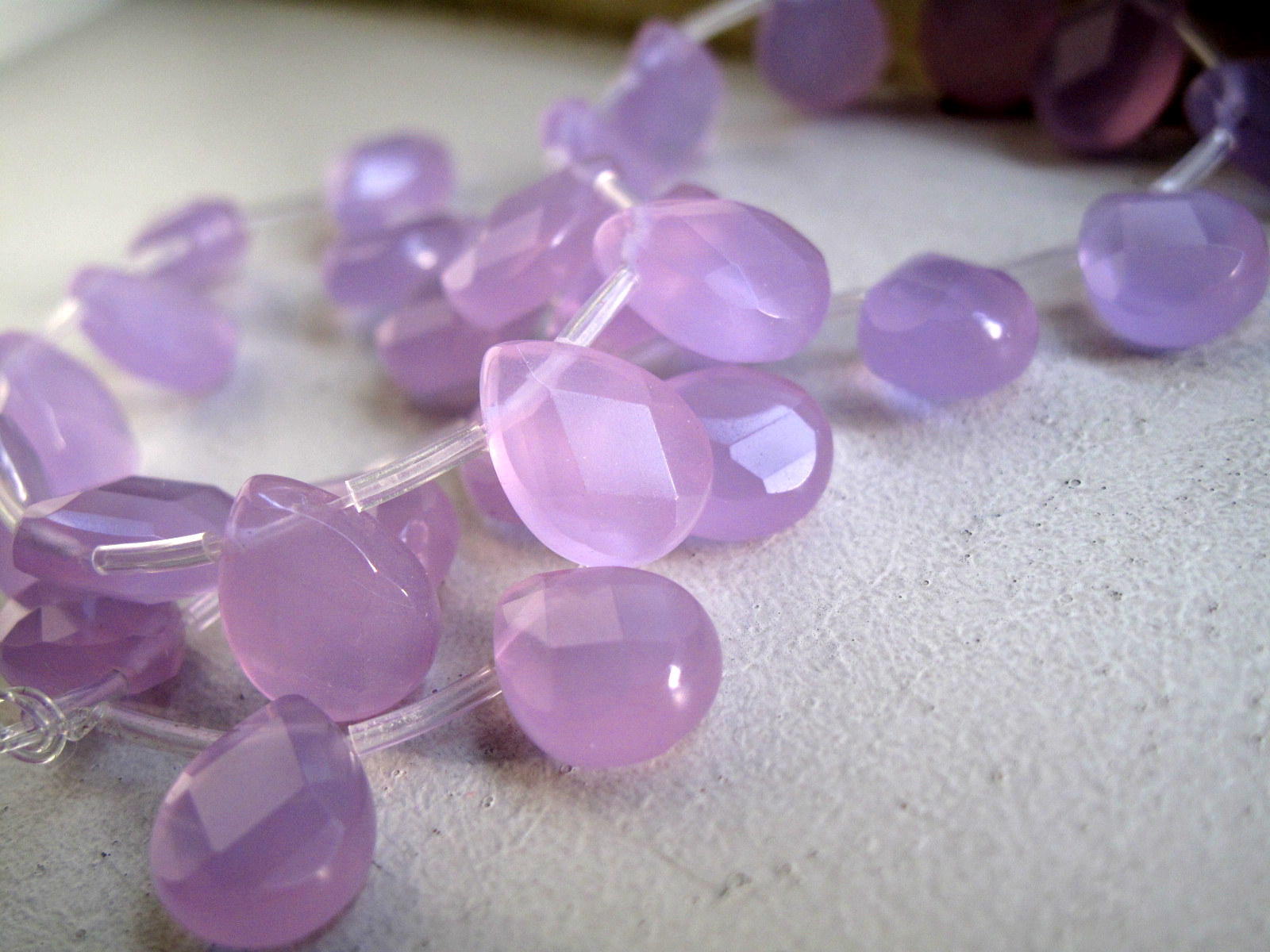
This is the time when reddish hues became visible but unfortunately I don’t think the camera caught it:
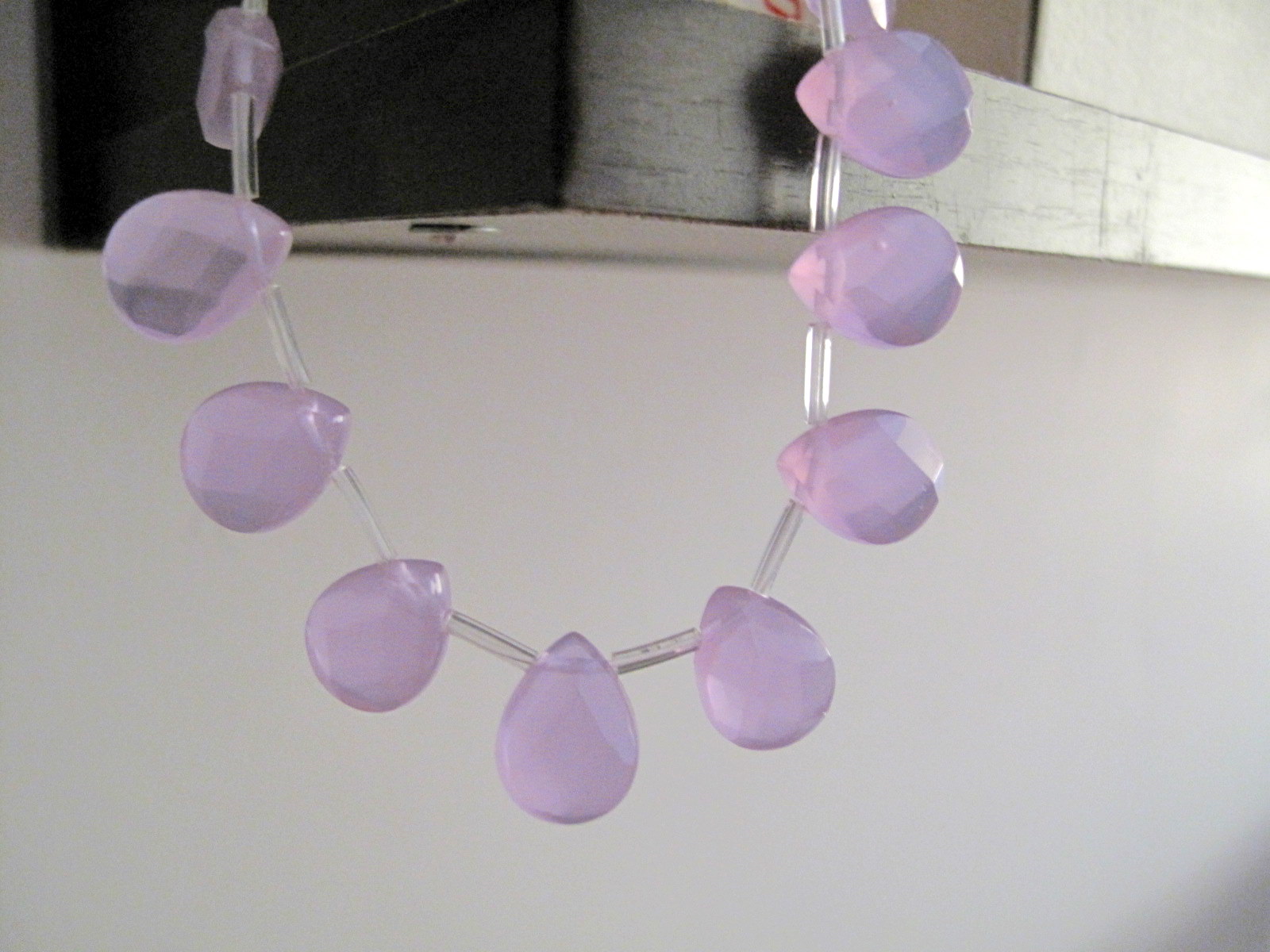
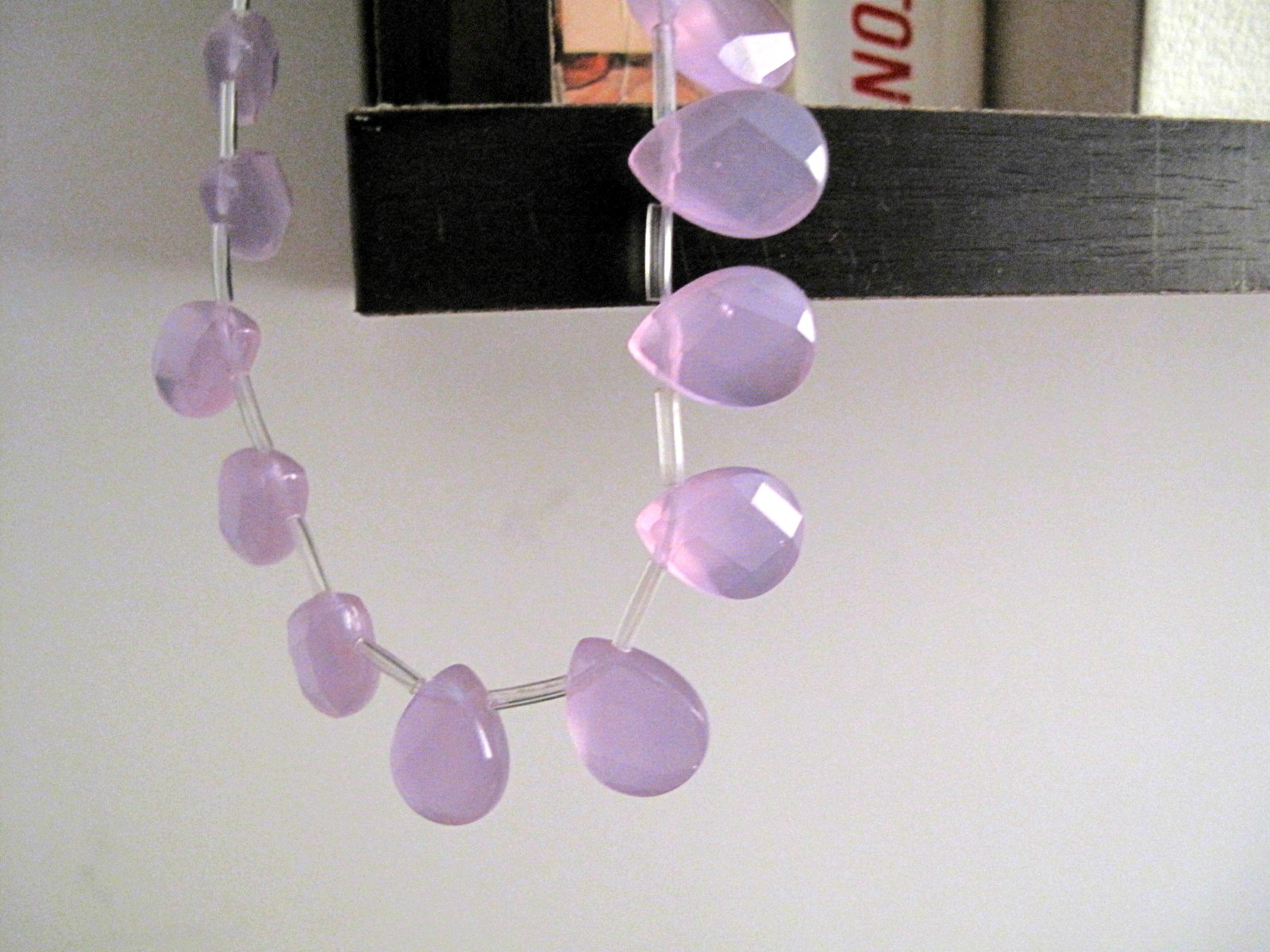
The dilemma now is designing something that will not only incorporate my signature look but make the most out of it……any suggestions, perhaps?
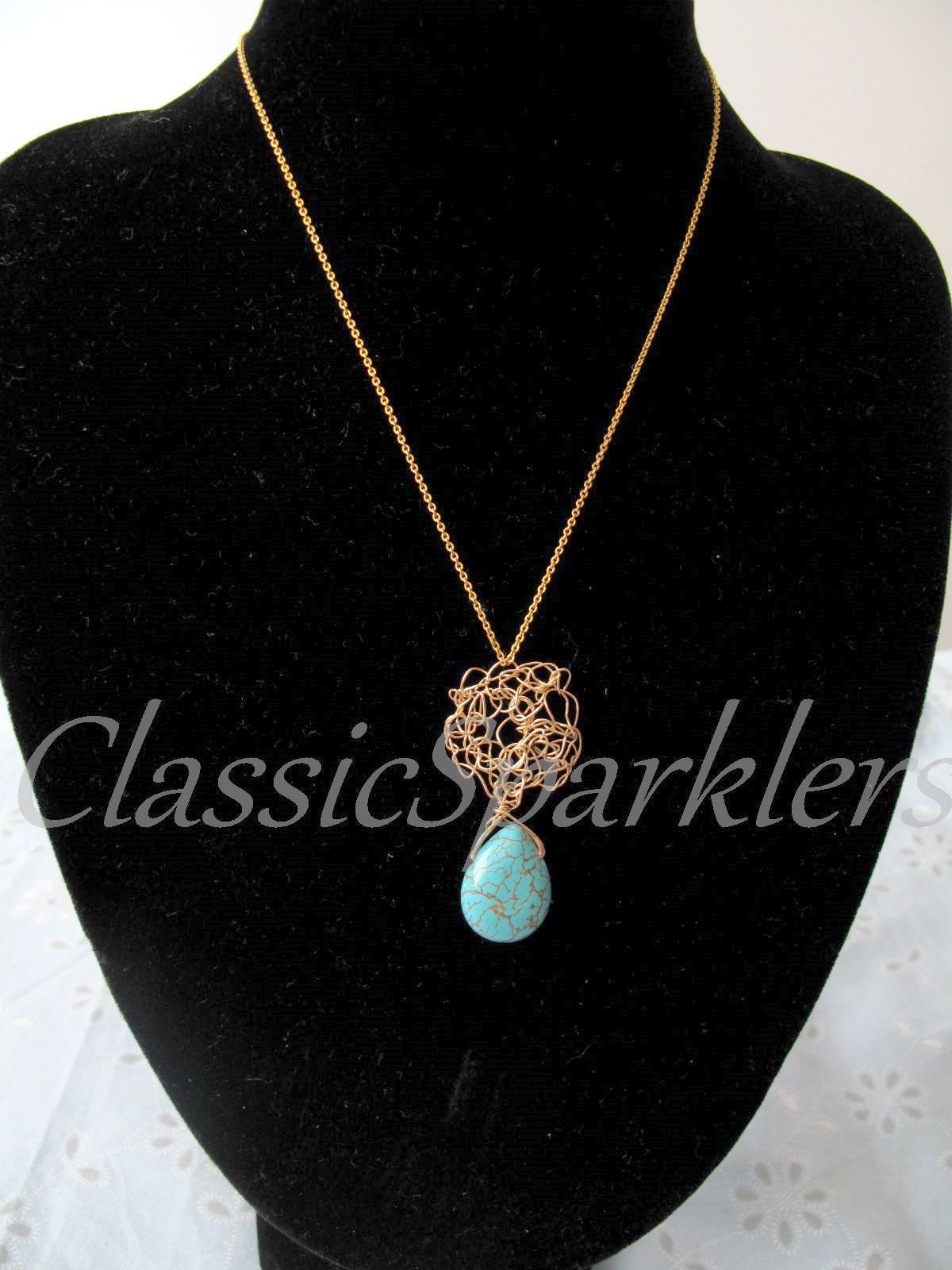
The color for 2010: Turquoise
I have always been fascinated with this gemstone and if I remember correctly, it was the first gemstone I ever worked with!
The ancient Egyptians used turquoise in jewelry. It’s color ranges from greenish-blue or pale sky blue. The name means “Turkish stone” as it came to Europe by way of Turkey. Turquoise was mined more than 6,000 years ago in Sinai and is one of the oldest protection amulets, and was also known as a symbol of wealth in many ancient cultures.
If given a turquoise by a loving friend, that stone would protect the wearer from negative energy and bring good fortune. The turquoise is the symbol of friendship. It also brings peace to the home.
This stone is a very personal and meaningful stone to one who wears it. It takes on the characteristics of the owner.
The baghag, one of my daily blog reads, said that turquoise is the color for 2010. And thus, in honor of this beautiful stone, I’d like to share with you a few creations. Enjoy!
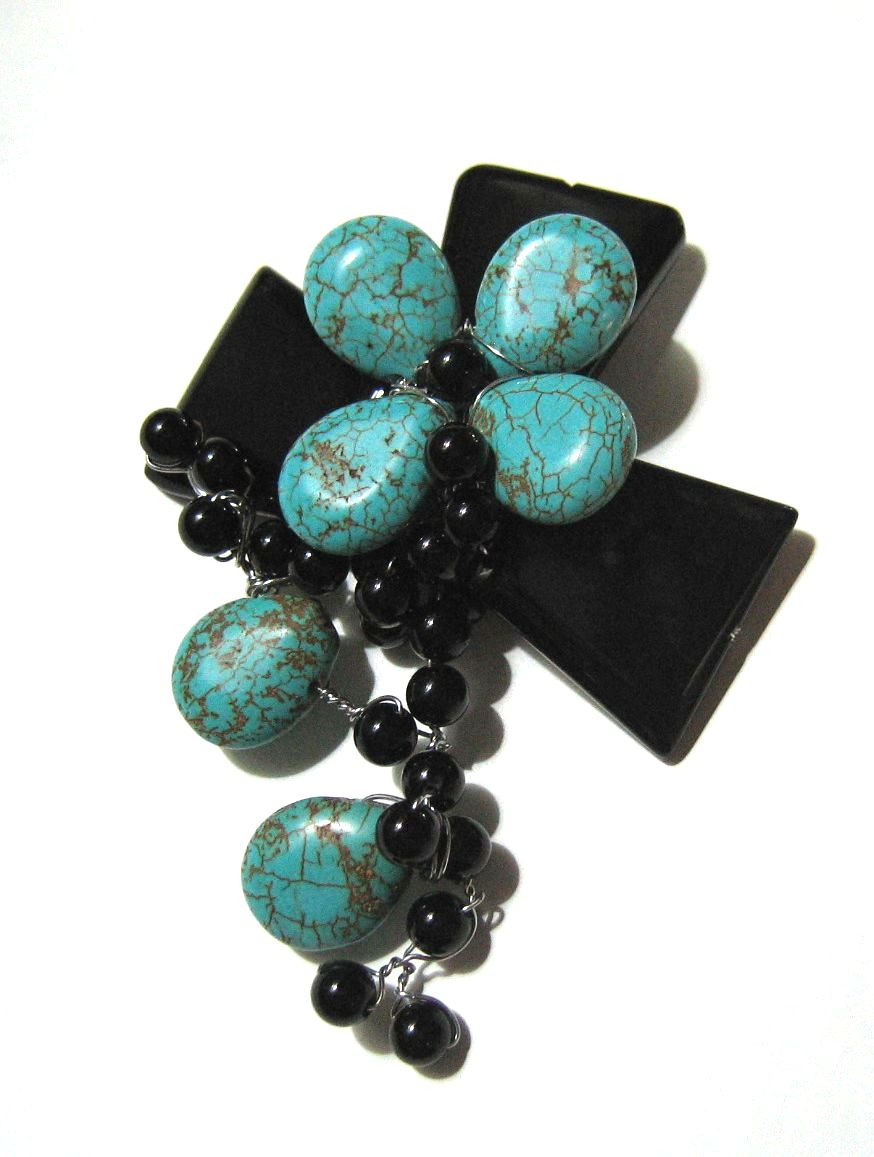


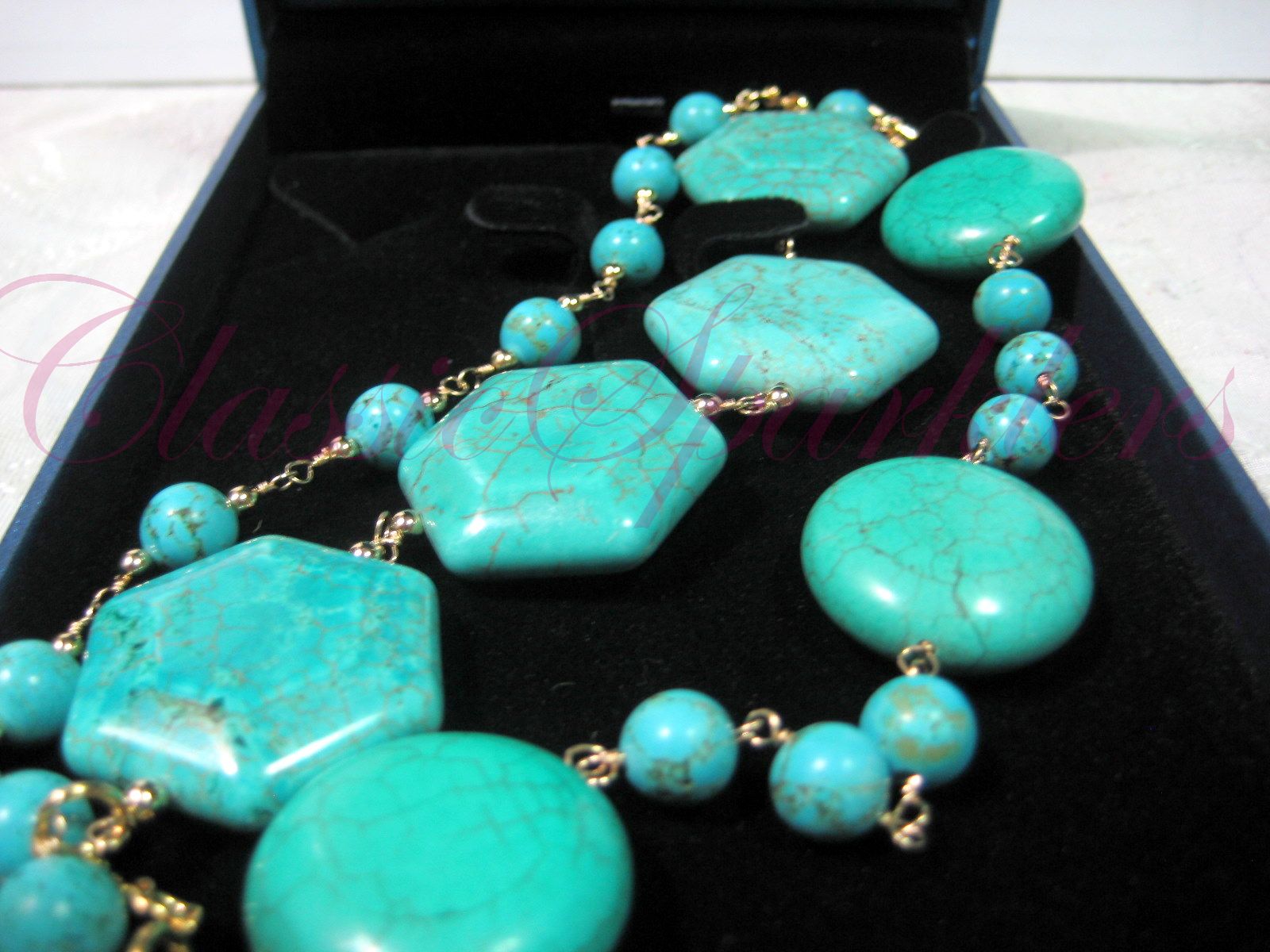
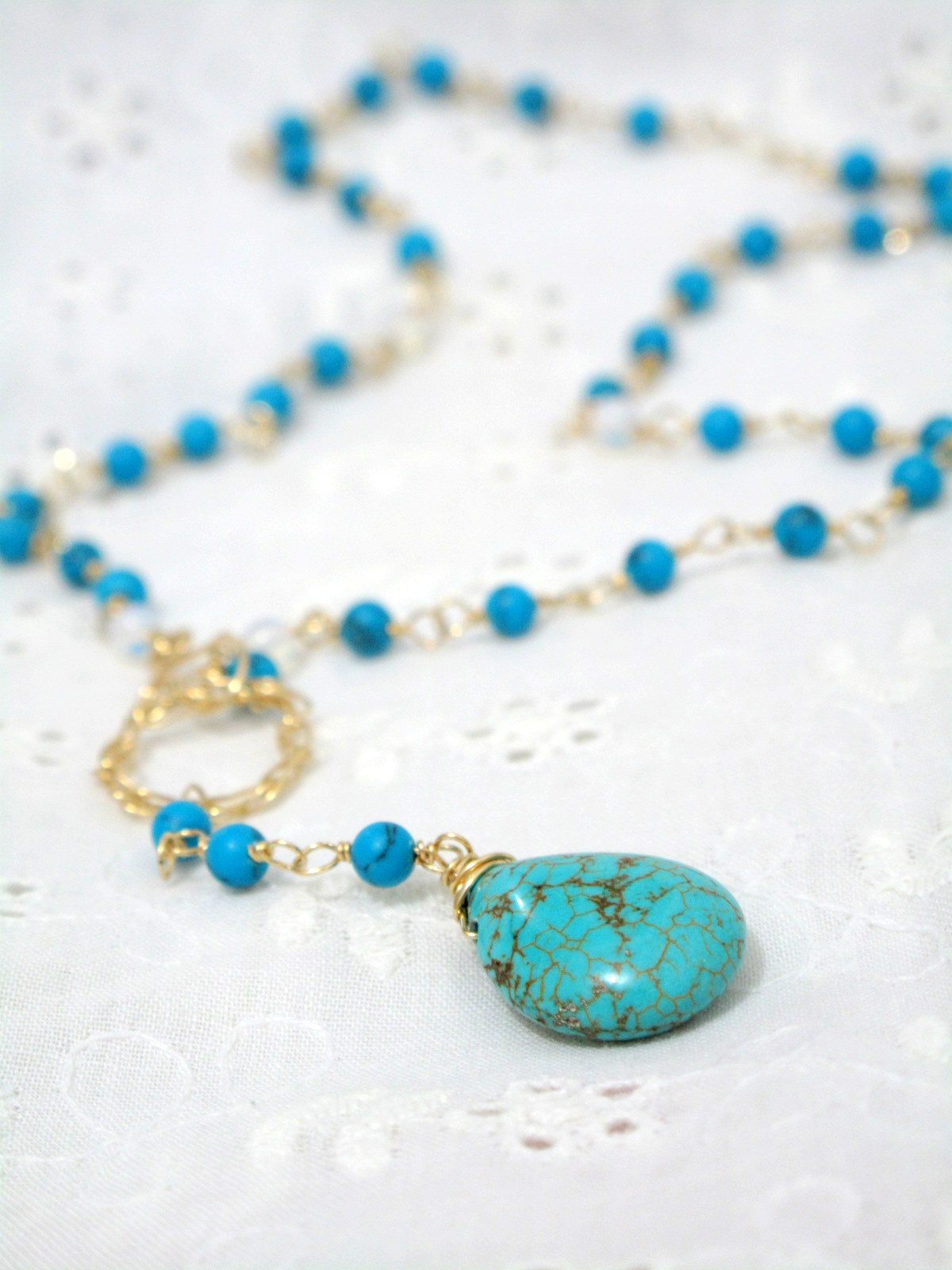
That’s why I love to experiment!
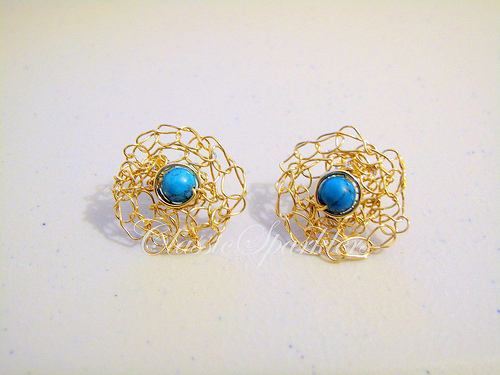
A client wanted something big, but not too big. Round. With turquoise gemstones and definitely not a dangler. Something that can be worn during the day but classy enough for the evening.
A vague description with very little to work with. This is why I do not sketch any of my designs. I love to experiment and I like seeing my imagination run wild. Most of all, I try as much as possible to incorporate my signature designs to the client’s description.
Thus, the final product:
Memorable Weddings (1 of 2)
The first wedding client I ever had was my cousin.
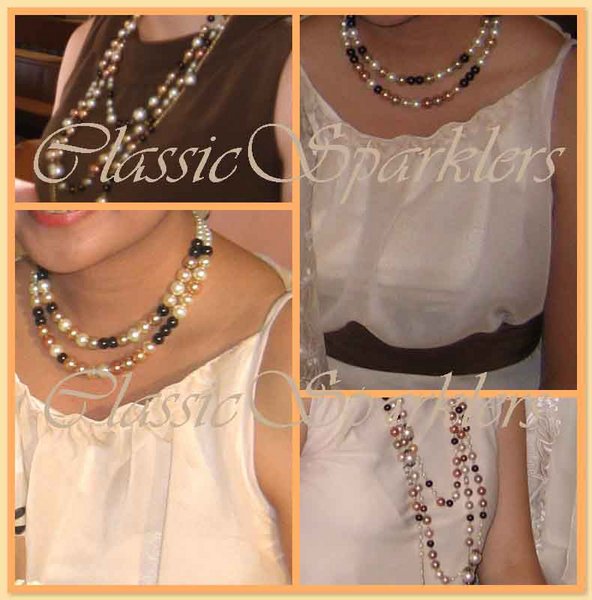
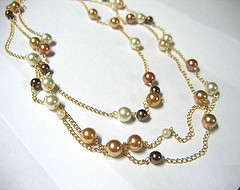
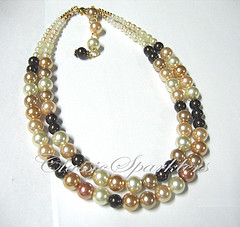
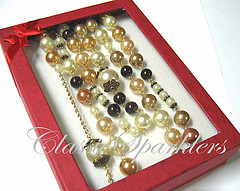
Her request was for me to create an accessory line for her entourage that will go well with their gowns.

She also asked me to make her wedding cord. This she was very specific. She wanted one in the shape of a rosary so as to put in the altar after the wedding.

For her, there was the bridal watch. I was very nervous about this. She wanted it stretchable. I can’t find a photo of it, though.
For her wedding coordinators, she asked me to create something in their favorite colors. I decided on a necklace. One was a detachable triple strand necklace, the other was a detachable double strand. Again, I can’t find the photos.
Then a few years after, our youngest girl cousin tied the knot, she also asked for my help.
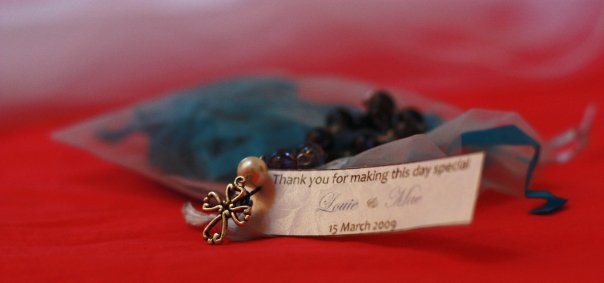
For this wedding I made 150 rosary souvenirs
for the maid of honor
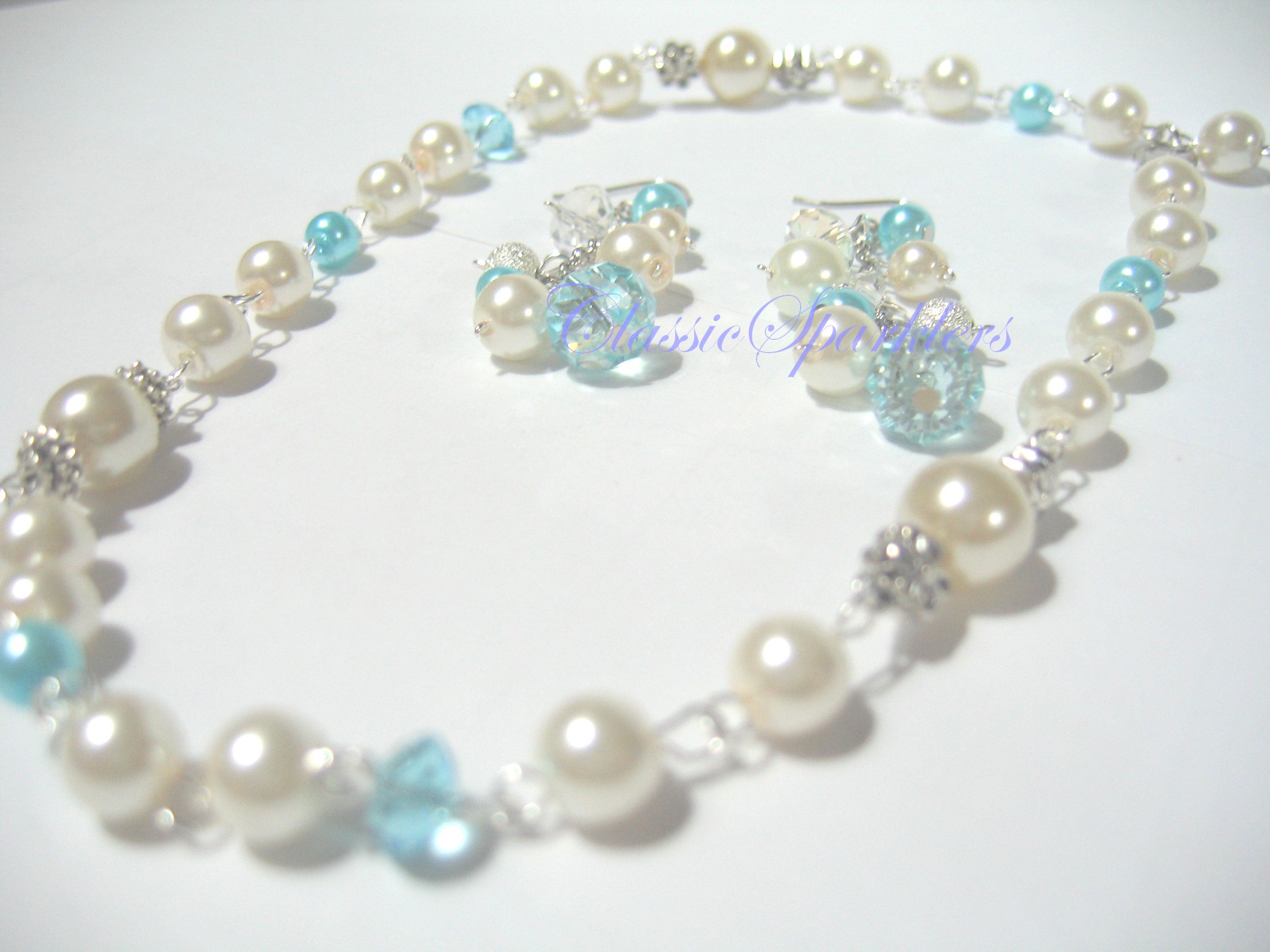
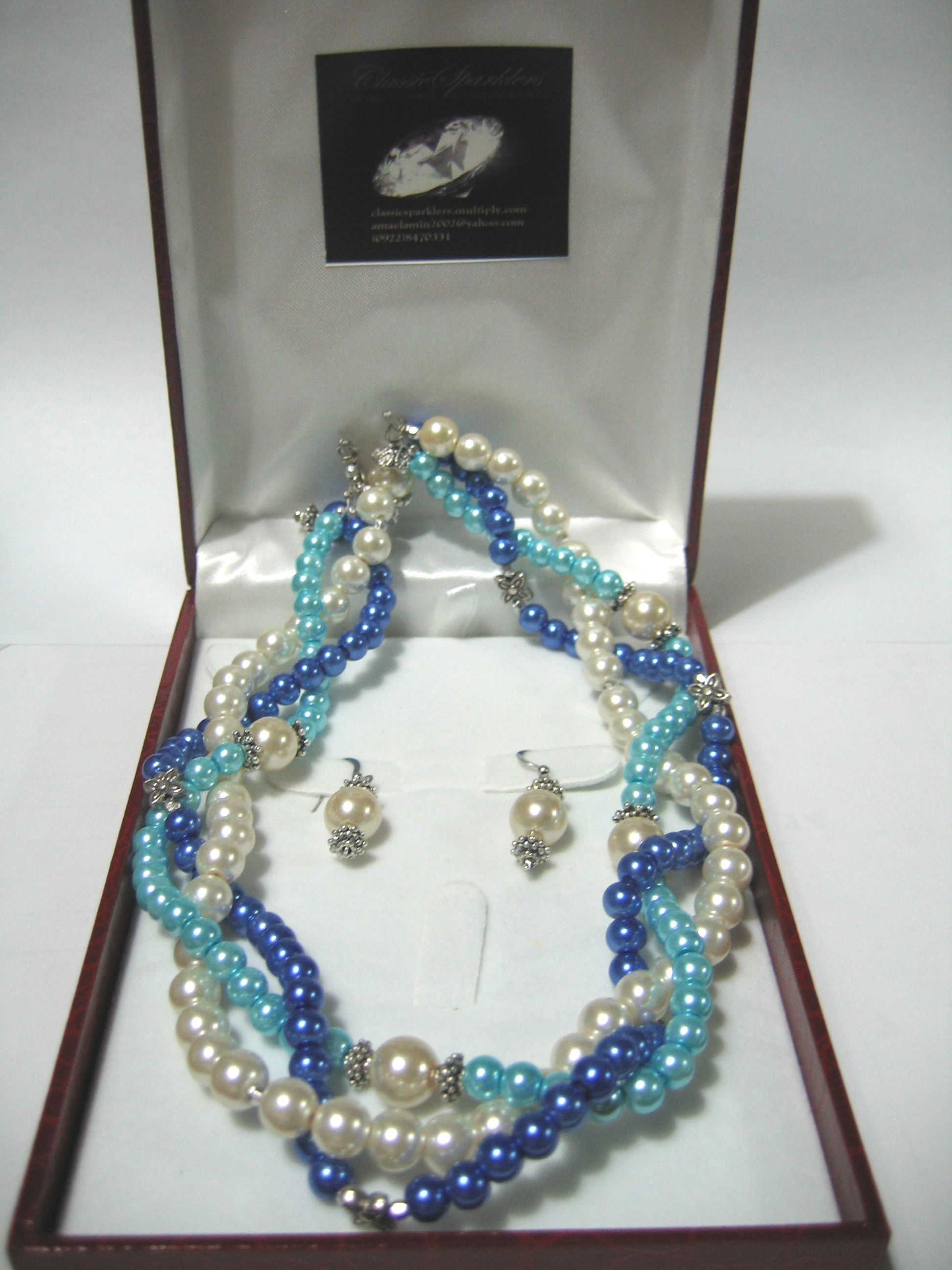
for the bride’s mother, my aunt
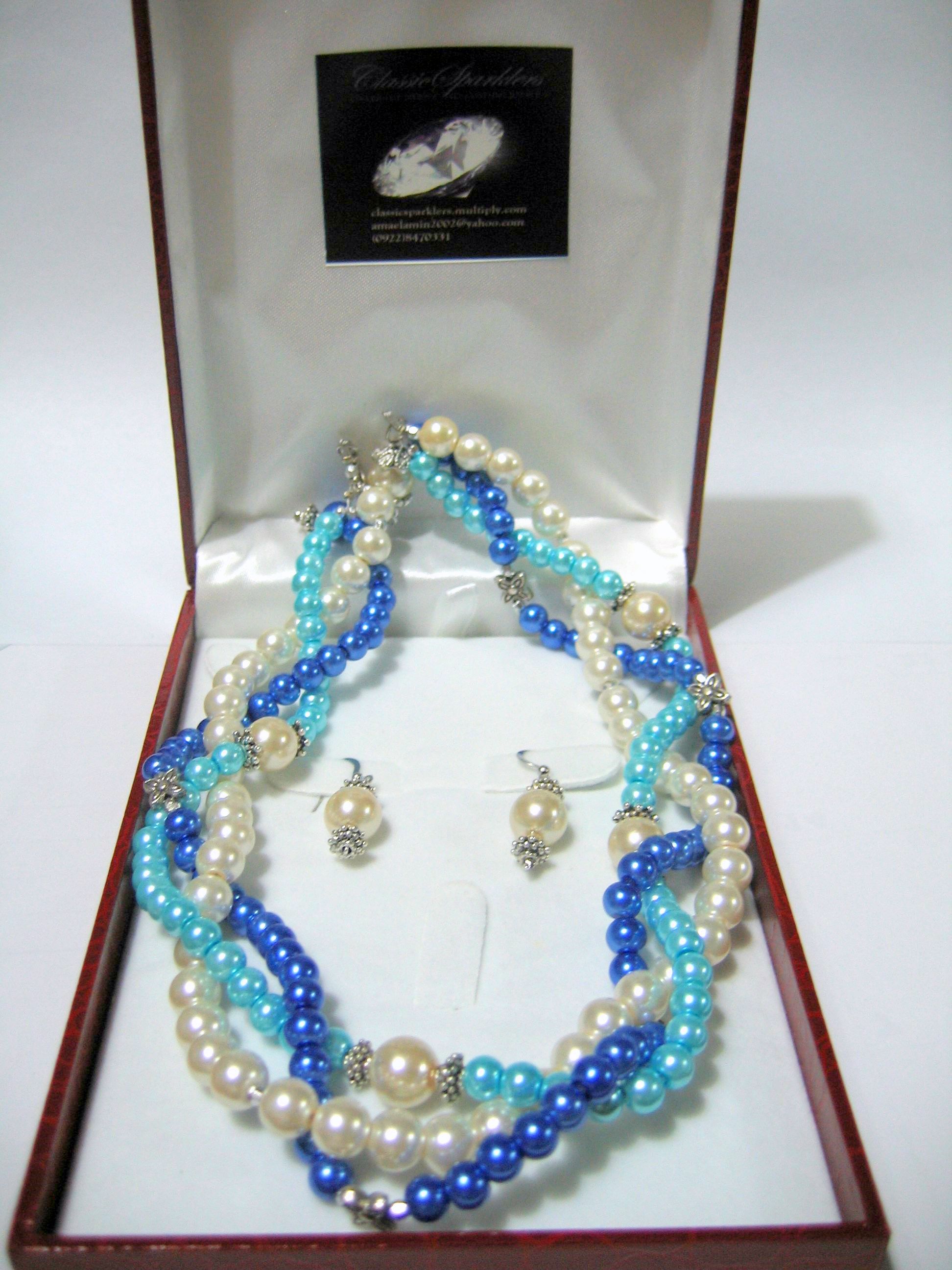
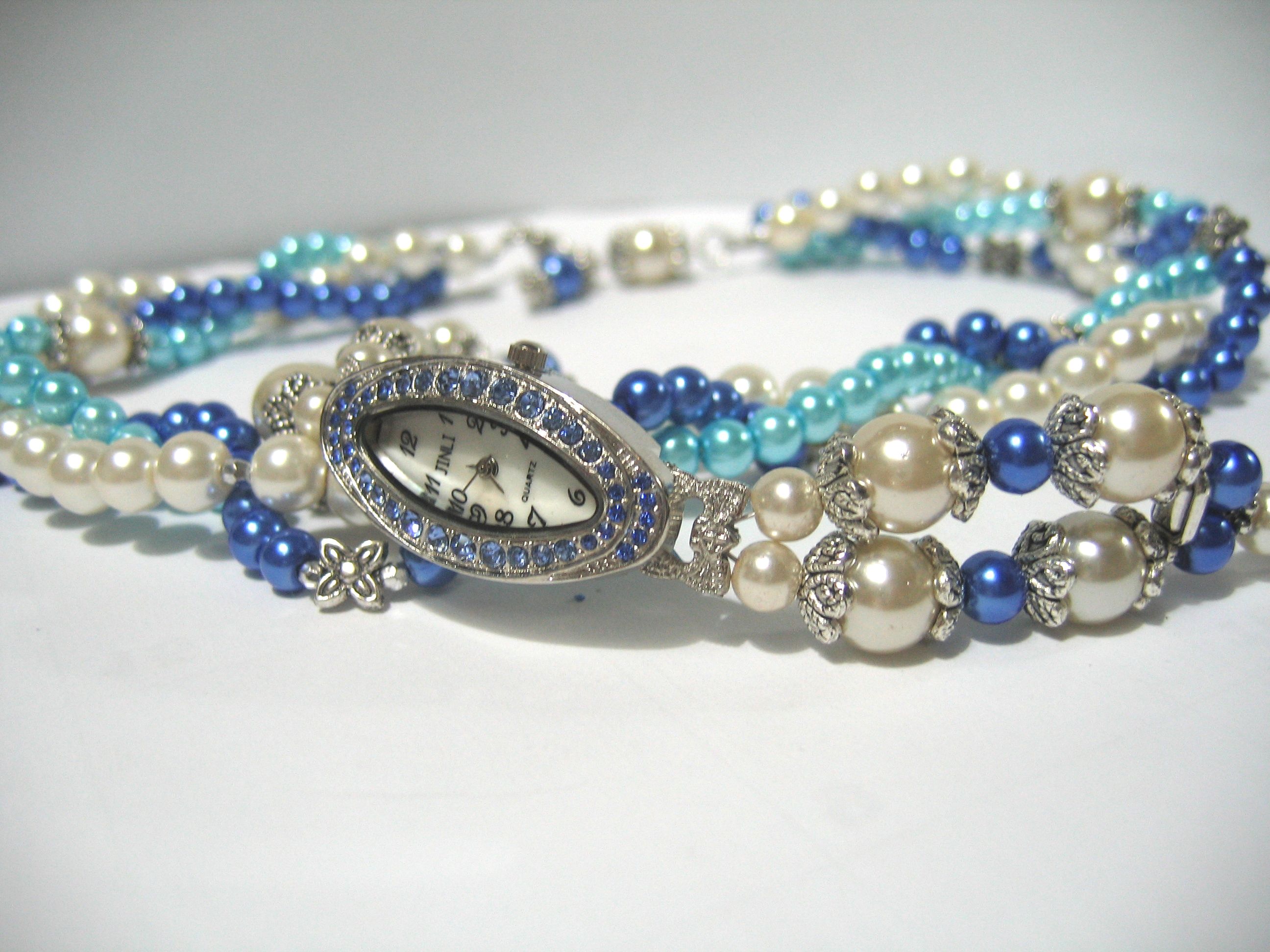
for the mother in law
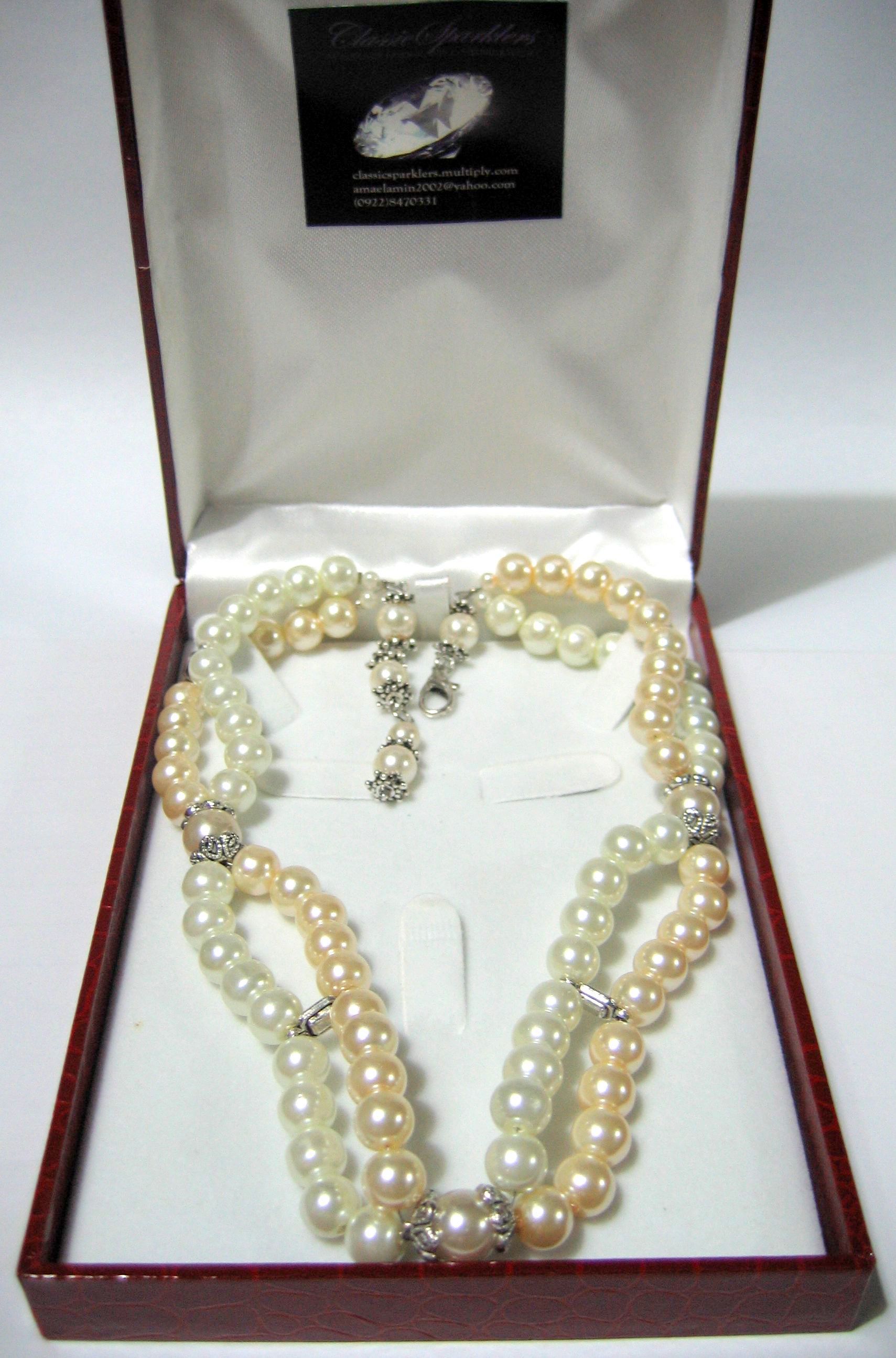
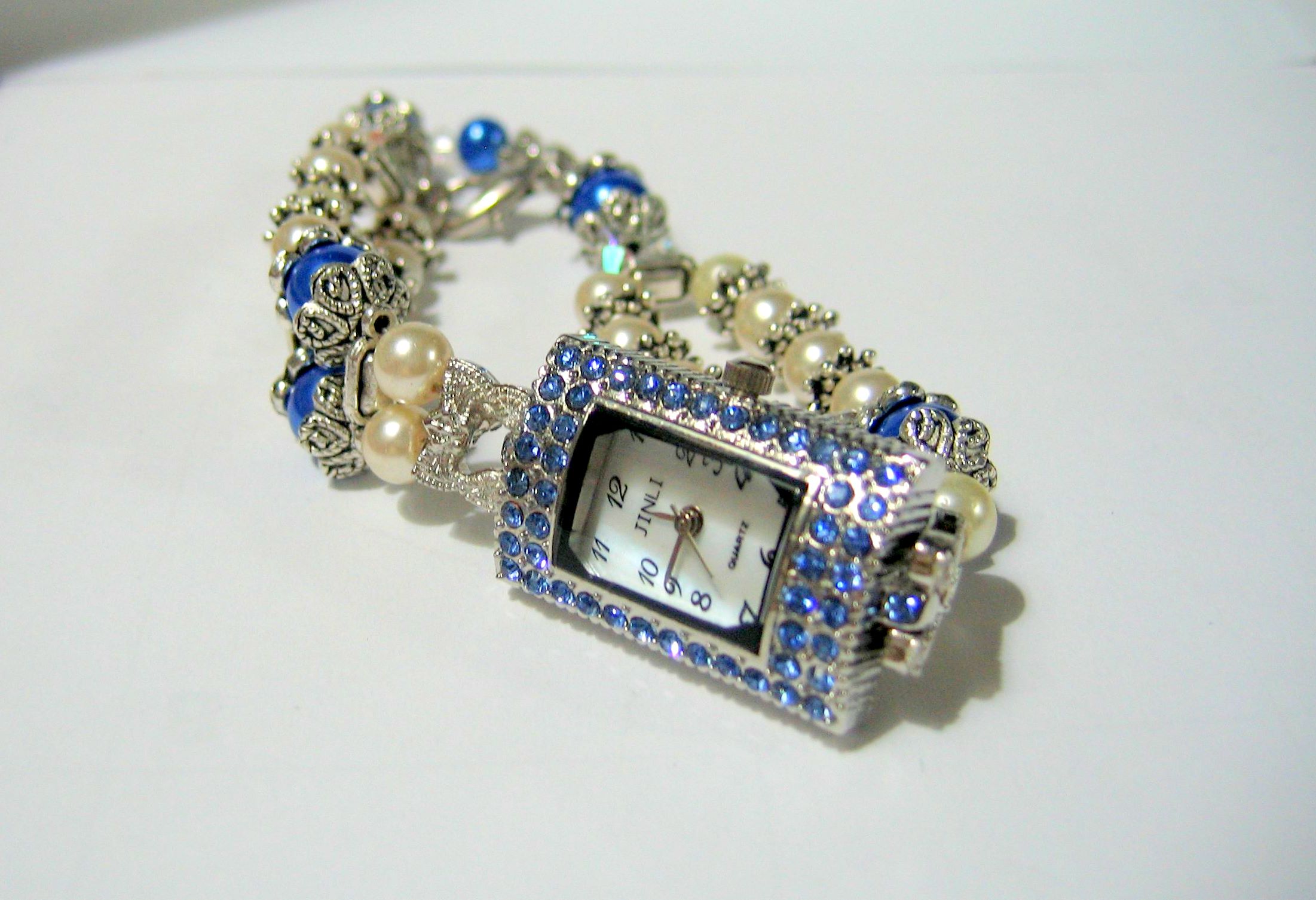
for the grandma
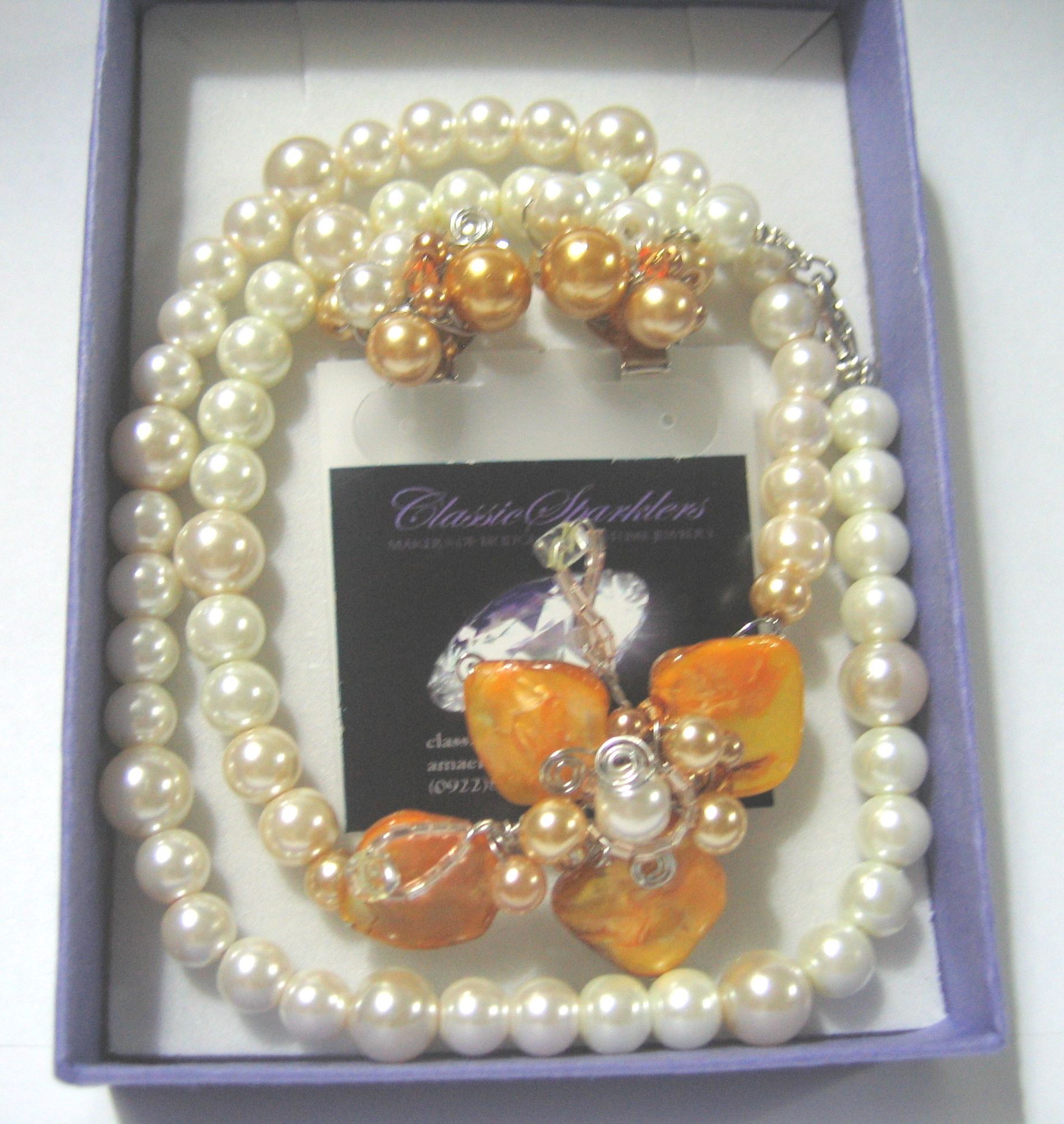
ornate headbands for the flower girls

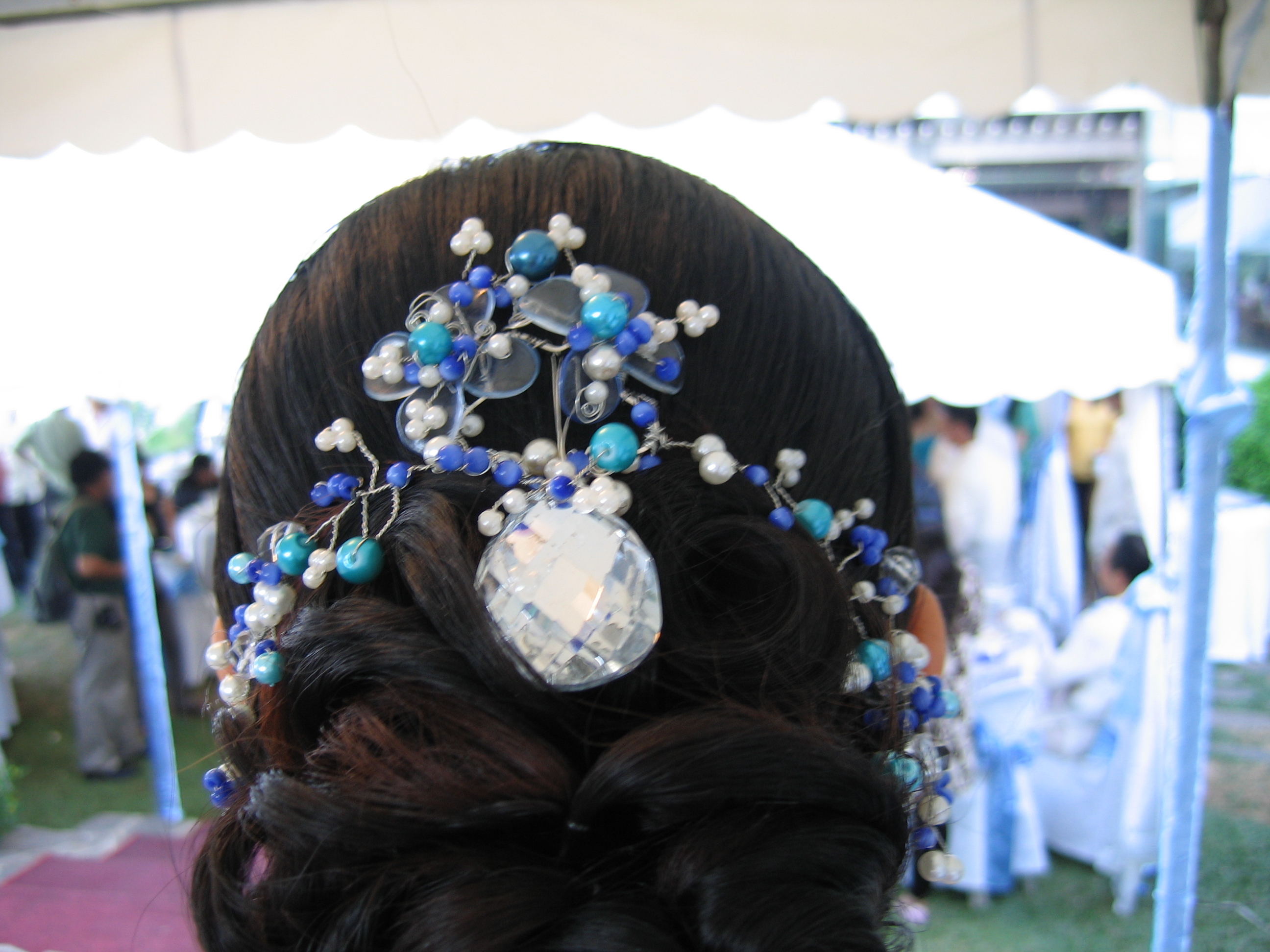
a hairvine for the bride
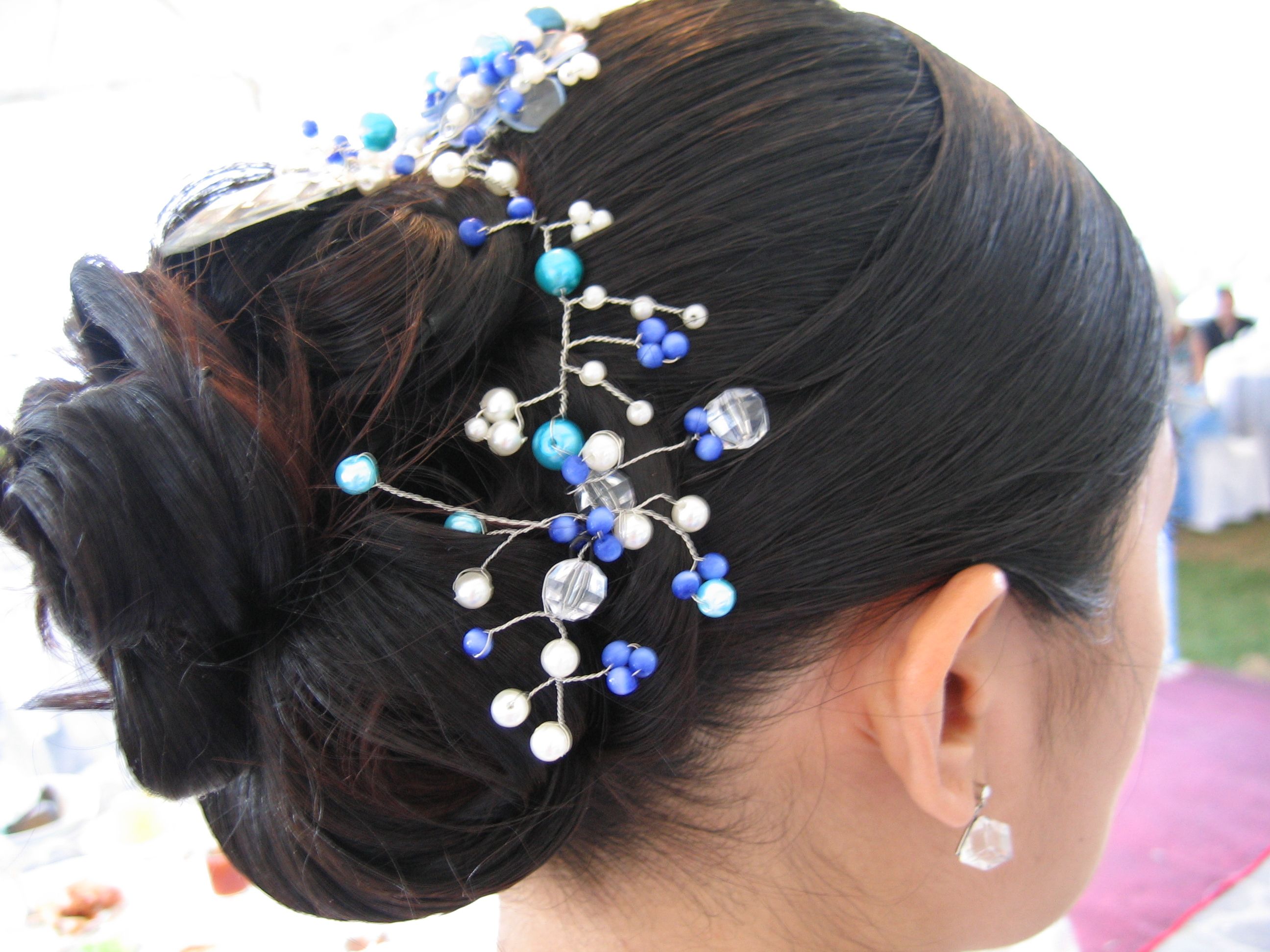
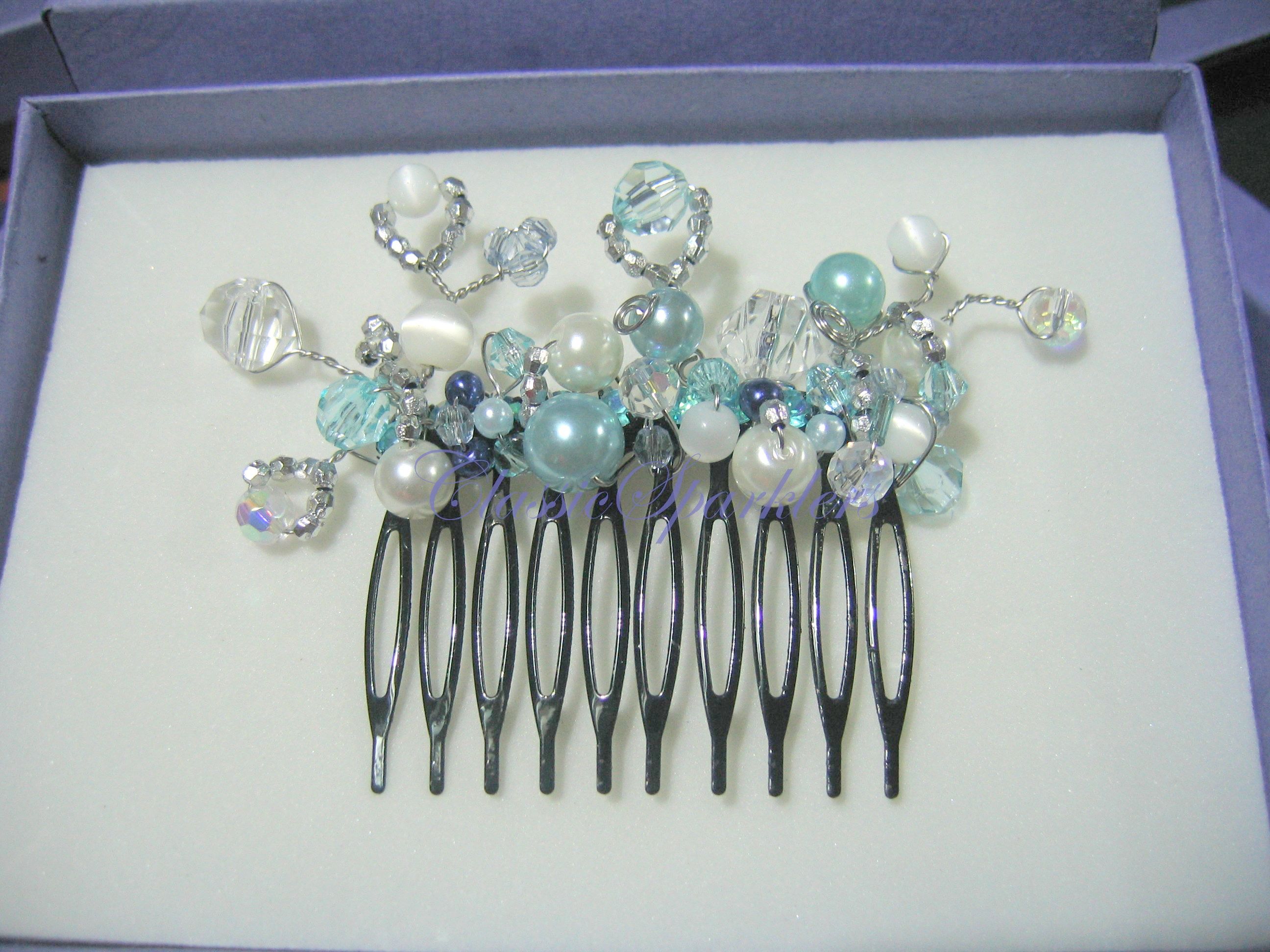
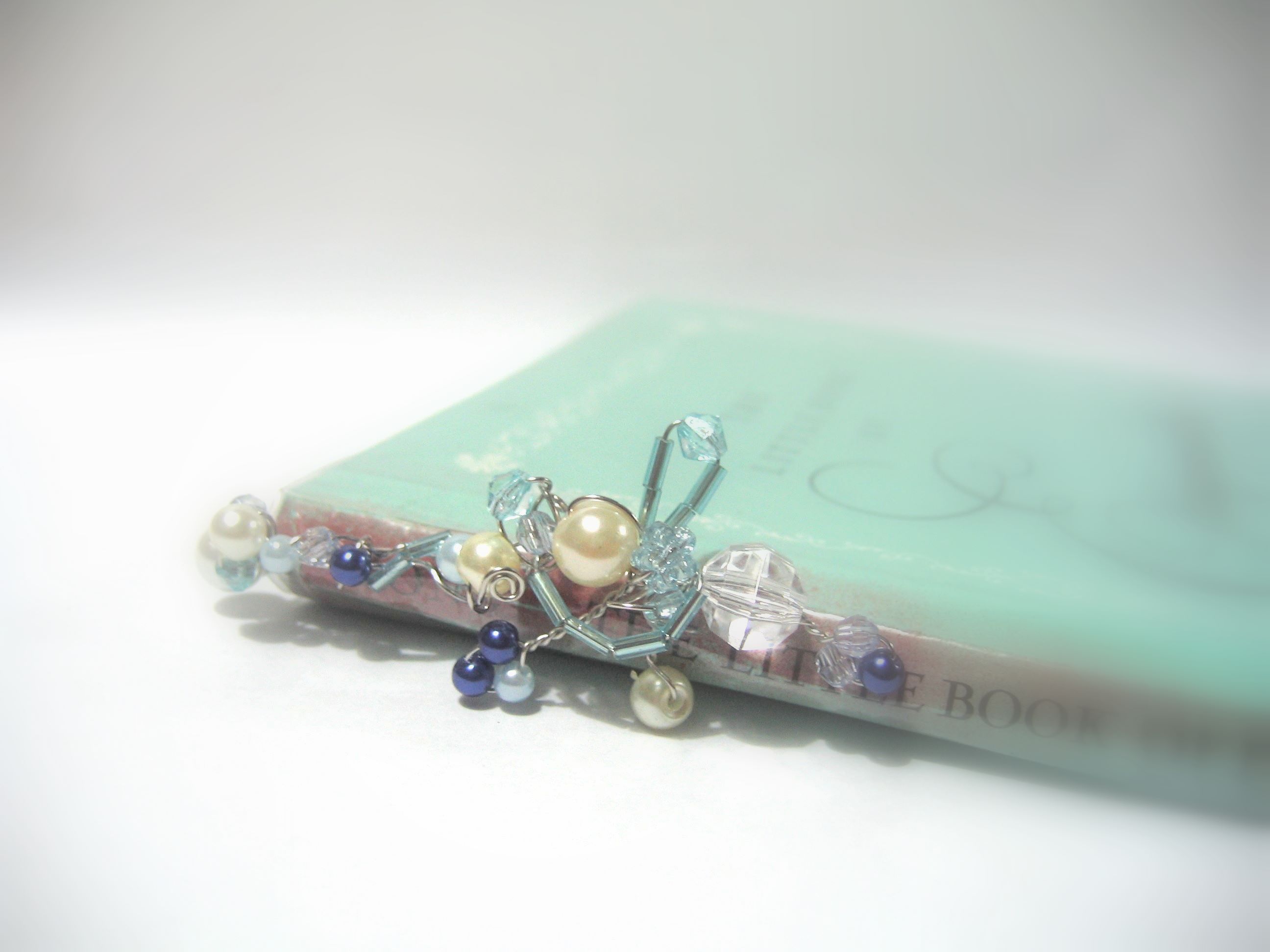
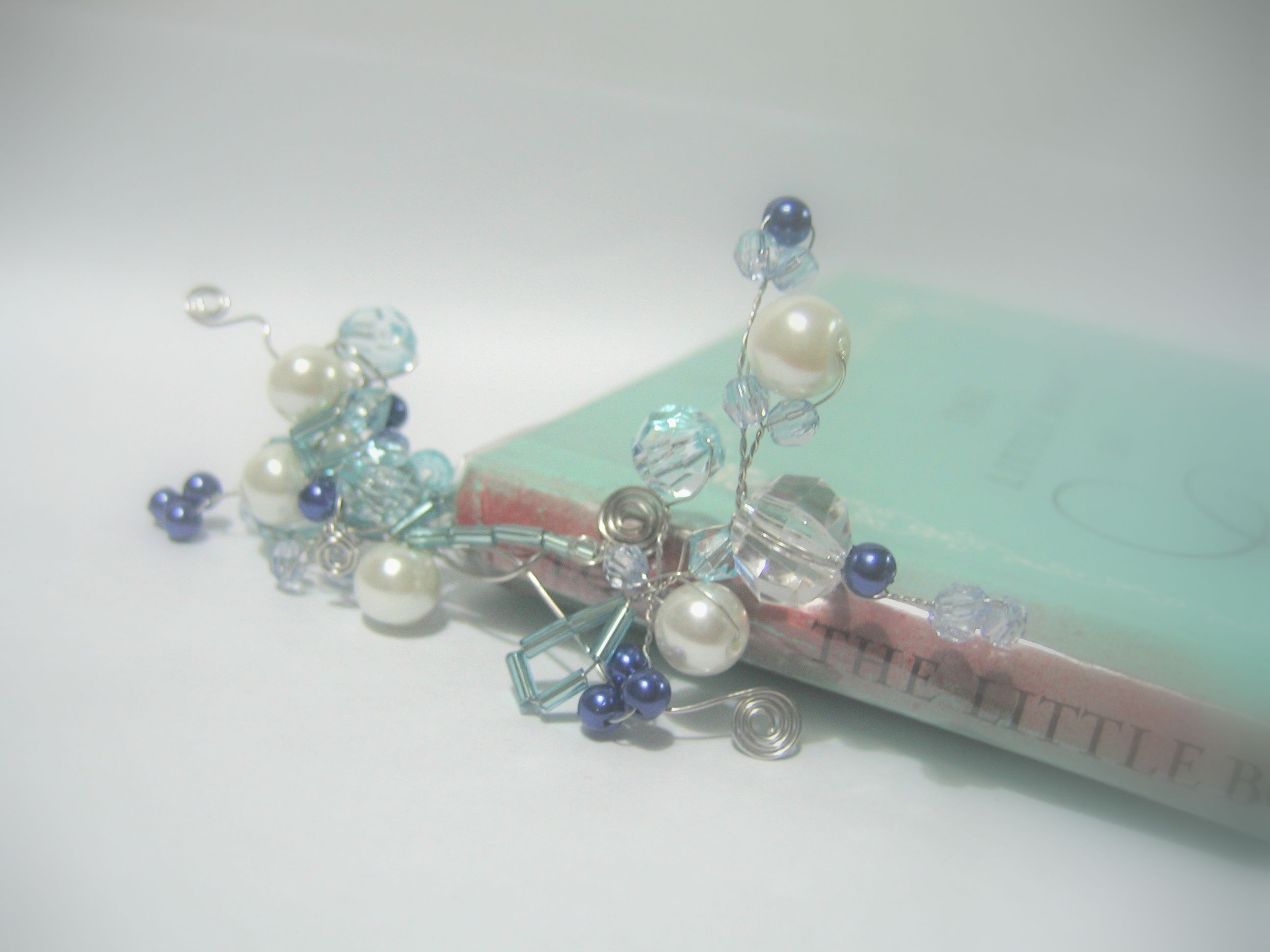
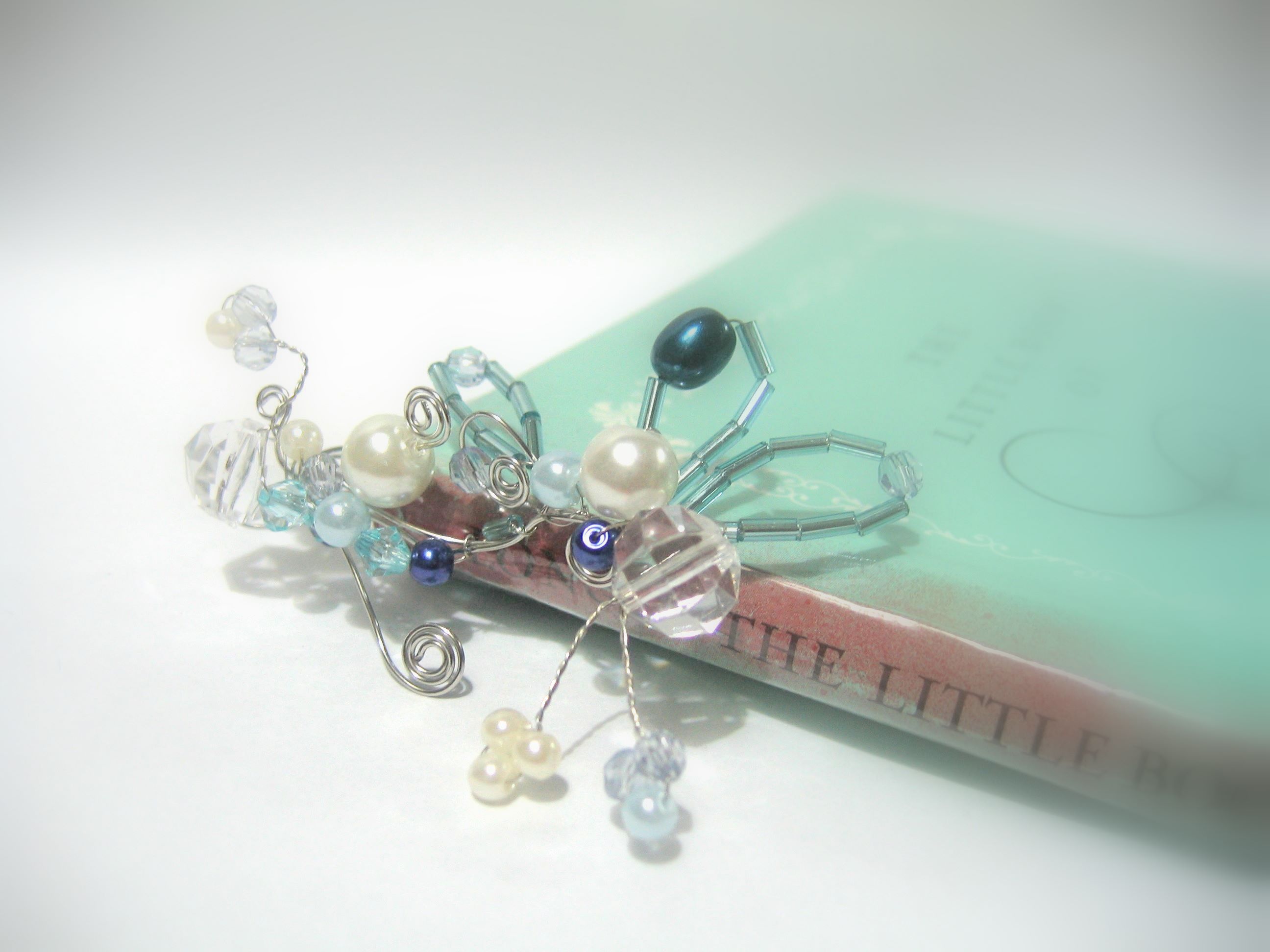
For the principal sponsors, I made wire-wrapped bookmarks and peinetas
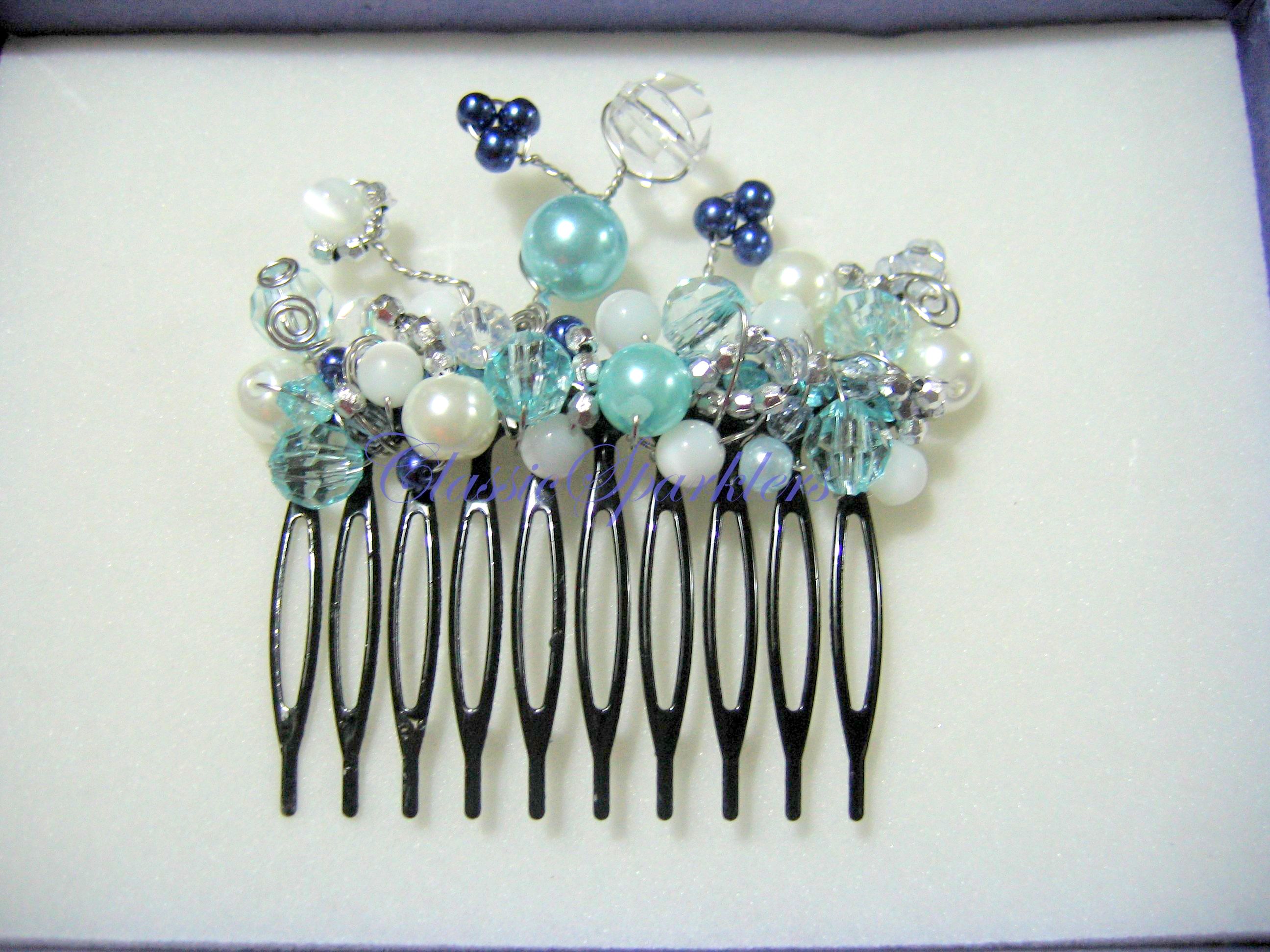
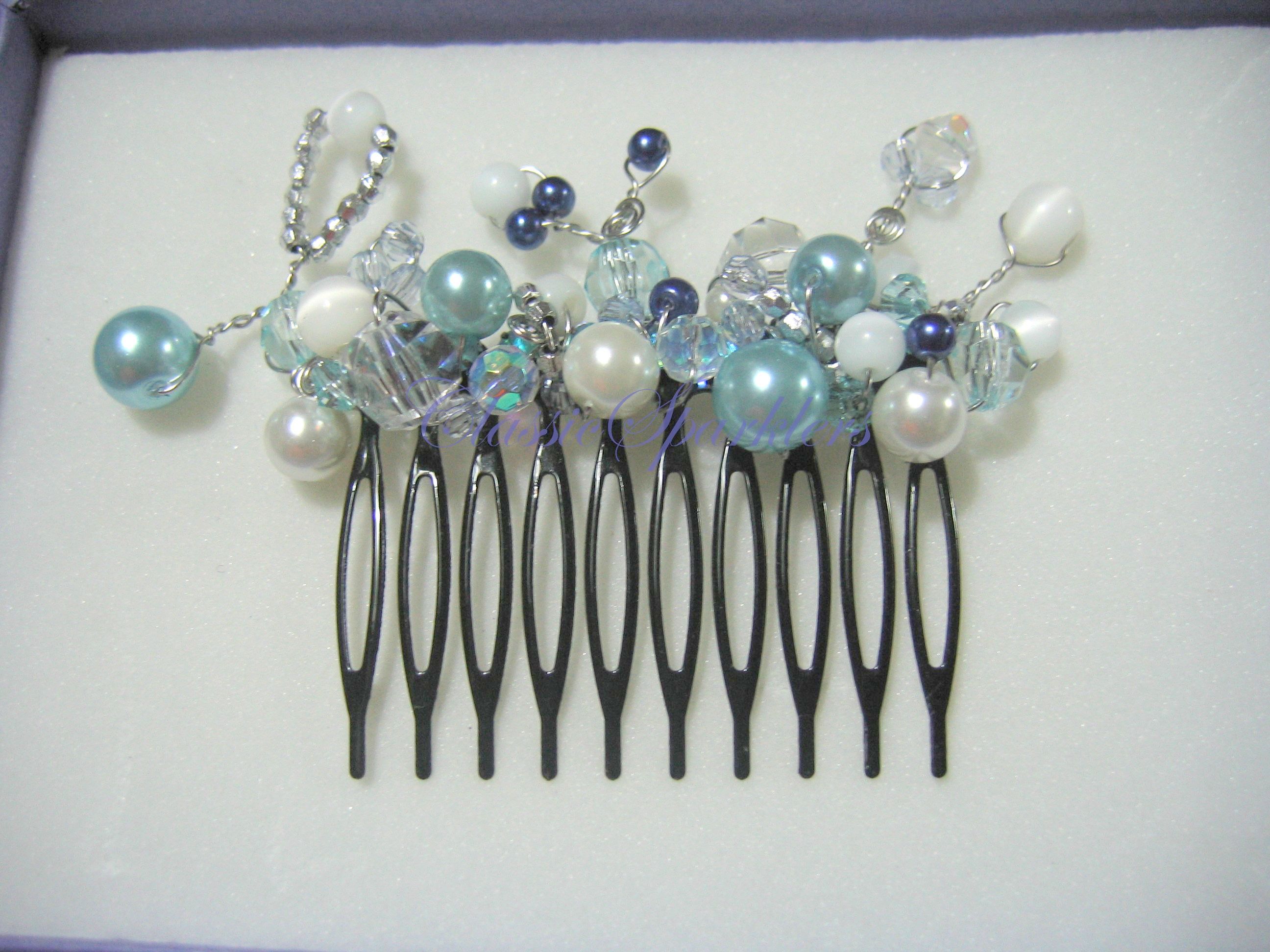
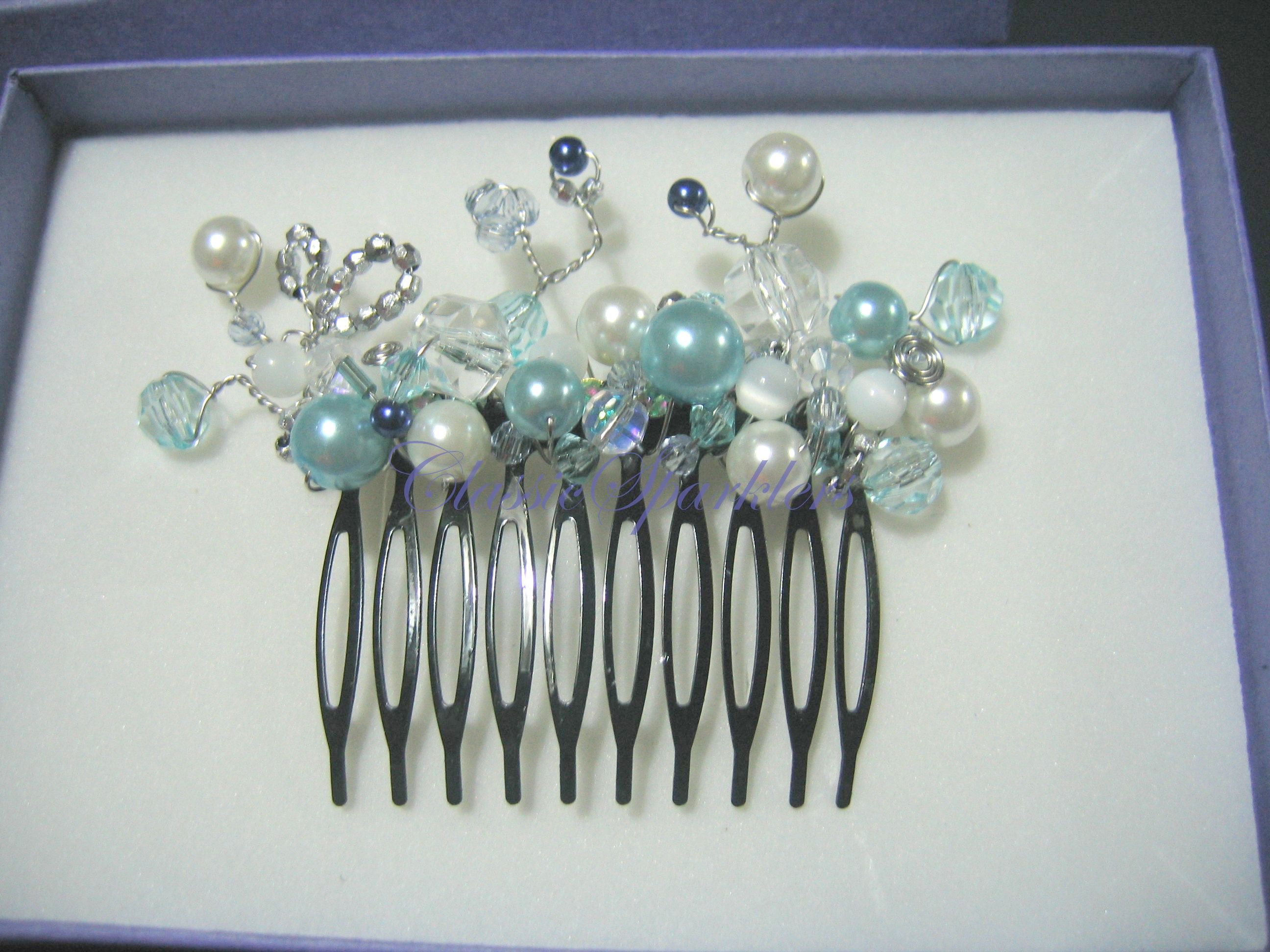

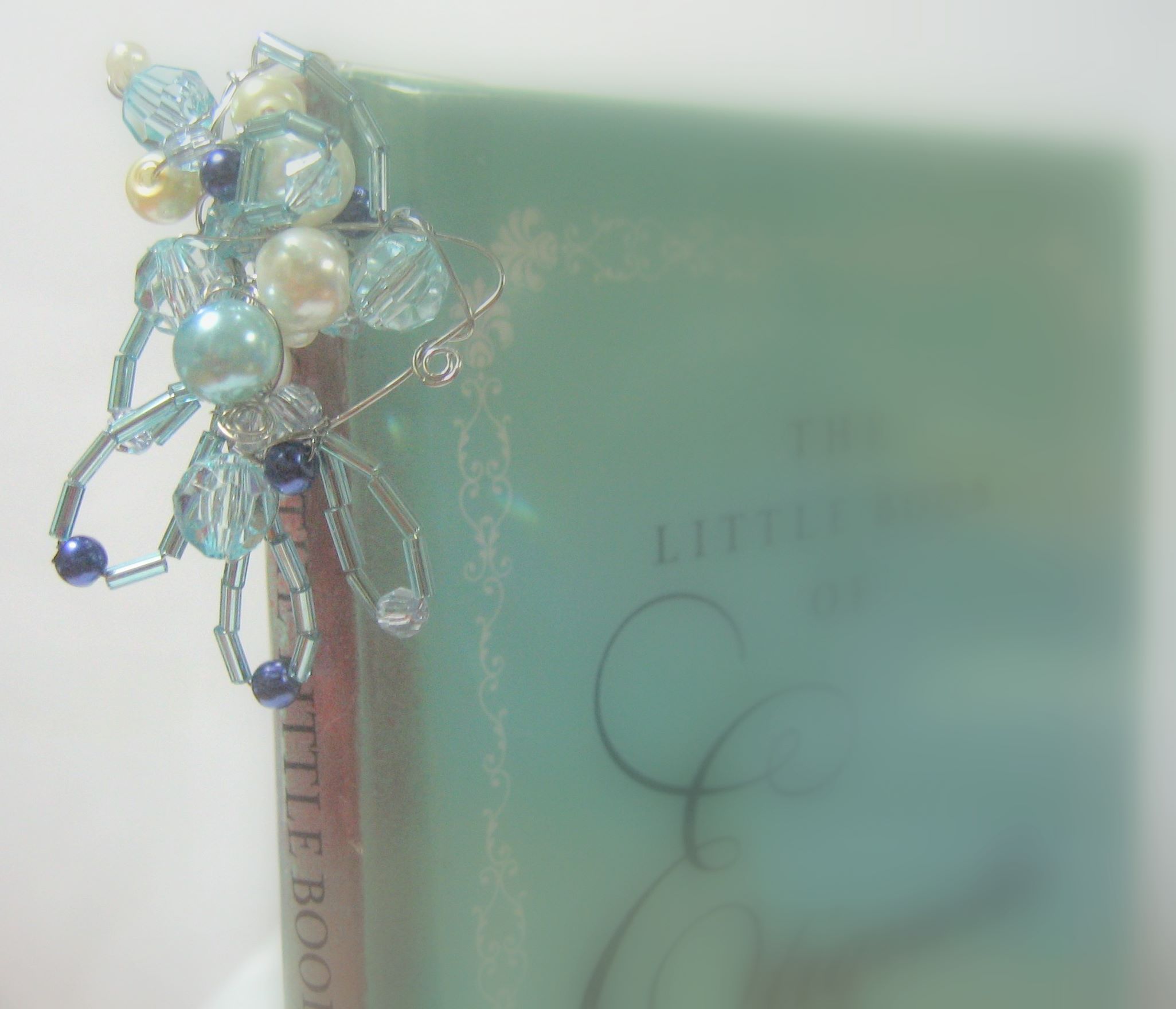
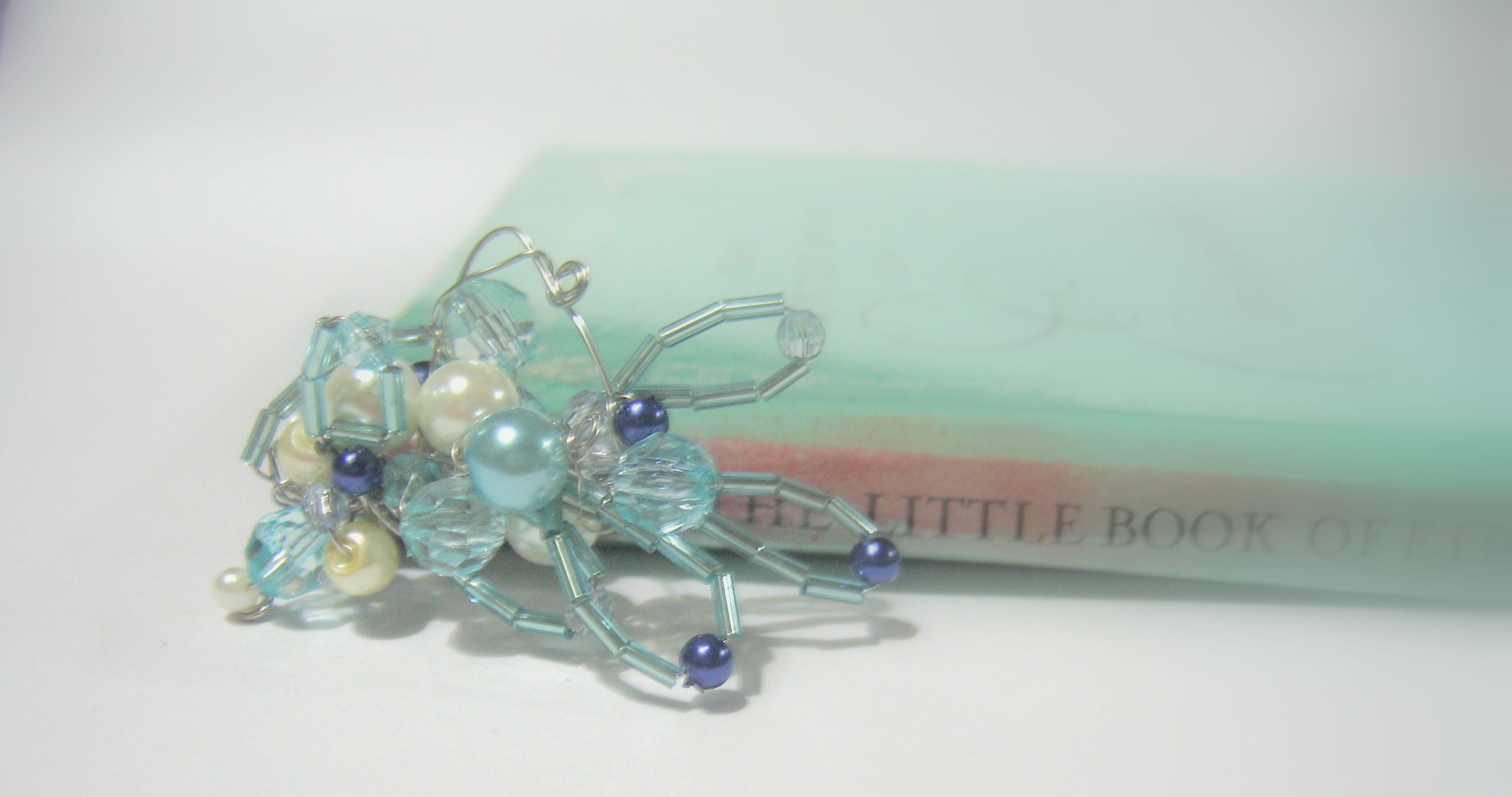
Last but not least, the wedding cord
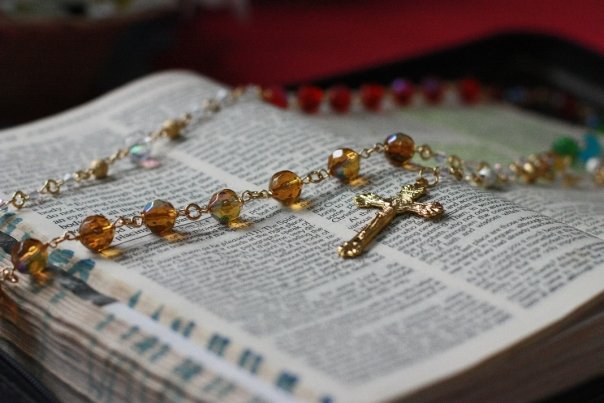
to be continued……
Know your Gold
Yellow Gold
By far the most common color of gold used in jewelry, yellow gold is gold in its natural shade. Yellow gold is usually alloyed with copper and silver to increase the strength of the metal. How yellow the metal is depends upon the content of gold. A 14-karat piece of jewelry will have a brighter yellow hue than a 10-karat piece. Likewise, an 18-karat piece of jewelry will have a deeper yellow than 14-karat gold, and so on.
White Gold
Increasing in popularity in recent years, white gold has become fashionable as the preferred cool and contemporary look. White gold boasts the same properties as classic yellow gold, but achieves its white color by mixing with different alloys. In general, white gold is created when a nickel or palladium alloy (zinc and copper) is used. White gold may also be plated with an even whiter metal, such as rhodium, to enhance its cool appearance. As well, a white gold setting can enhance the rapture of white diamonds.
Rose or Pink Gold
Rose or pink-colored gold can be created by alloying copper with yellow gold. This hue of gold tends to have a pink, bluish tint that complements many skin tones.
Green Gold
This color variation of gold can be created by alloying silver, copper and zinc with yellow gold.
KARATS
Gold’s softness and malleability make it a wonderful metal to work with when creating virtually any design in jewelry. But this softness can be a drawback as well. To make it stronger and more durable, gold is usually alloyed, or mixed, with other metals such as copper or silver. The higher a metal’s percentage of gold content, the softer and more yellow the jewelry piece. The karat weight system used to measure gold in a piece is the same for all hues, including white and yellow gold.
The word “carat” is Arabic, meaning “bean seed.” This is because historically seeds were used to measure weights of gold and precious stones. In the United States, “karat” with a “k” is used to measure gold’s purity, while “carat” with a “c” is used in measuring a gemstone’s size. The karat mark of gold represents the percentage of pure gold to alloy.
24K is pure gold or 100% gold 21K is 21/24ths gold content or 87.5% gold
In the United States, jewelry with this karatage or higher is rare. It is far more common in Europe, the Middle East and Southeast Asia.
18K is 18/24ths gold content or 75% gold
This karatage is a popular high-end choice in the United States, Europe and other regions. Its popularity is spreading throughout North America.
14K is 14/24ths gold content or 58.5% gold
This is the most common gold karatage in the United States because of its fine balance between gold content, durability and affordability.
10K is 10/24ths gold content or 41.7% gold
This karatage is gaining popularity for its affordability and durability. Commonly used in everyday-wear jewelry such as rings, 10K gold beautifully withstands wear and tear. It is the lowest gold content that can be legally marked or sold as gold jewelry in the United States.
Gold Filled, Gold Plated & Vermeil
Alternative types of gold jewelry include gold filled, gold plated and vermeil. Over time, gold plating and vermeil will wear off, requiring re-plating.
Gold plating is an electrolytic process in which a gold coating of at least 10K gold with a minimum thickness is affixed to all surfaces.
Vermeil refers to mechanically bonding or electroplating gold with a minimum fineness of 10K over a base of sterling silver. Gold-filled jewelry consists of a layer of 10K gold or better mechanically bonded to the surfaces of a base (non-precious) metal. This layer of 10K gold must be a minimum of 1/20th of the total metal weight to be called gold filled.
*originally posted here
What a nice surprise!
After coming home today from a baptism, this is what greeted me as soon as I opened my email:
 what was featured here was my Winter Sonata rock crystal and crocheted sterling silver earrings 🙂
thanks, suziboutique!
Birthstones Part II (July-December)
July – Ruby
The red ruby represents passion, desire, achievement and strength. Ruby is also a gemstone of mystery and can evoke strong emotions of love, strength, leadership and power.
August – Peridot
As one of the emerald colors, peridot is a beautiful gemstone that represents mystery, passion, beauty and enchantment. If you’re a trendsetter or forward-thinker, this could be a gemstone for you. Peridot can also symbolize money, power and justice.
September – Sapphire
A calming, soothing and beautiful stone, sapphire represents confidence, wisdom, strength and idealism. It is uplifting and can evoke strong feelings of love, harmony and peacefulness. If you have a peaceful but strong personality, this may be your gemstone!
October – Opal
Opal is considered to be a mystical gemstone and is commonly found as black opal, dark grey or a dark blue. Black opal is the rarest, but it can also be found in fiery colors such as orange, red, and yellow. It is considered to be the stone of good luck and fortune, and has healing properties that can ward off bad dreams and increase energy.
November – Yellow Topaz
Another “strength” stone, topaz is a yellow or brown “royal” stone that can balance emotions, calm passion and release tension. It is also considered to be the gemstone of rejuvenation, and can be used to relieve mental pressure.
December – Blue Topaz
One of the most attractive green-blue stones, turquoise represents wealth, happiness and strength. It is considered to have healing properties and can ward off illness, but ultimately serves as a stone of happiness and good fortune.
My winter wonderland
Eversince I received a package of rock crystals in the mail, I’ve imagined all the jewelry designs to have something of a winter-snow effect…..with the glistening whiteness of the crystals, that’s all I could ever think about. So together with my stash of white stones, I decided to come up with a collection which I aptly named: WINTER SONATA.
Here are some of the pieces so far:
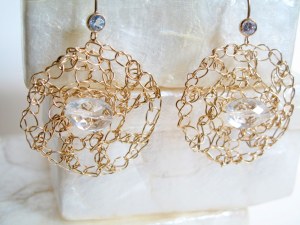 ICICLE EARRINGS
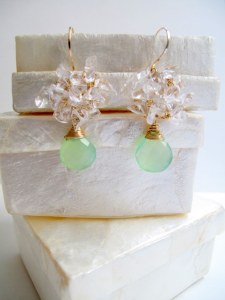 SPRING IN WINTER EARRINGS
Rock crystals are woven around the disc to give the effect of icicles falling from a tree to its leaves.
The leaves are made from faceted apple green chalcedony briolettes (11 carats).
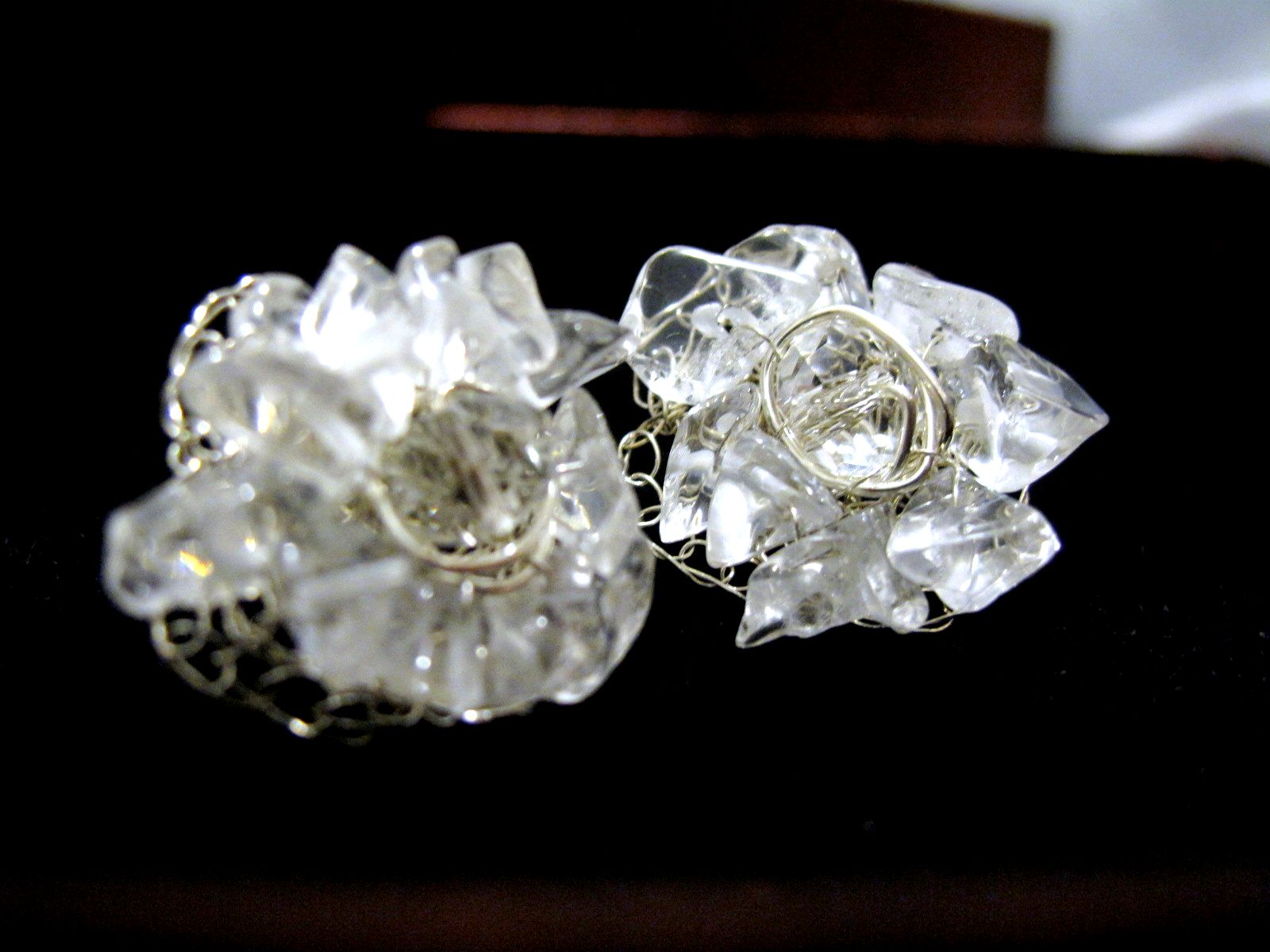 ICEBERG EARRINGS
The name says it all, right? Rock crystal chips are woven in crocheted sterling silver wire.
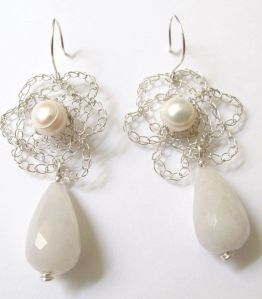 WINTER PRINCESS EARRINGS
A very delicate-looking but sturdy pair of earrings.
Crocheted sterling silver wire formed into a flower from where white faceted jade briolettes hang.
Birthstones (Part 1: January-June)
In the bazaars I’ve joined in the past, clients would always ask if I had birthstone jewelry available. This frequent request (also true with online orders) has made me decide to create and maintain a collection of birthstones. Included in my packaging are descriptions of the collection as well as the meaning of each, which I will share with you in this entry.
January (Garnet/Emerald)
Red garnet is thought to help with prosperity. Facilitates night vision, ensures success, and provides guidance, protection, purification, and warmth. The ancient Egyptians believed that garnets could purify the body of various types of toxins. It is also the traditional anniversary gemstone for the second year of marriage.
A Greek myth tells the story of Peresphone, the young goddess of sunshine, who was abducted by Hades, god of the underworld. The devil eventually released her, but not before he offered her some pomegranate seeds, which she ate and which guaranteed her return to him. Thus garnets have come to represent fidelity and commitment
However, if you do not want a red stone, the mystical birthstone for January is Emerald.
February (Amethyst)
Found in varying shades of purple, the amethyst represents royalty, piety, and sobriety. This gemstone is given as a sixth anniversary gift in addition to symbolizing sincerity and stability. Amethyst is symbolic of piety, spirituality, and a devotion to God. The intense violet hue of February’s birthstone appealed to early monarchs, perhaps because they often wore this color as a symbol of their elevated position. Purple dye was once scarce and expensive, so it was reserved for the garments of royalty, and the color came to symbolize power and status.
The Greeks believed that whoever wore an amethyst or drank from an amethyst cup would not become intoxicated. In fact, the word amethyst is derived from the Greek word “amethystos,” meaning sober. In ancient Greece, the gemstone was associated with the god of wine, and it was common practice to serve this beverage from Amethyst goblets in the belief that this would prevent overindulgence.
March (Aquamarine)
The accepted anniversary gem for the 19th year of marriage. Created by combining Latin words for water (aqua) and sea (mare), aquamarine does indeed resemble the bottomless blue of seawater. As a gift, aquamarine is unsurpassed in its legendary abilities to preserve and enhance mutual love, to ensure truth in relationships and to maintain a good marriage. aquamarine is believed to release anger and negativity replacing them with mental peace and clarity, providing emotional and mental balance. It has been used as an aid in meditation and to assist in self-expression.
Ancient Romans believed the magnificent gemstone was sacred to Neptune, the god of the sea. Some legends say that it was gift from mermaids, while others suggest that Neptune retrieved it after it fell from the jewel boxes of sirens and washed onto shore. Early sailors wore aquamarine talismans, engraved with the likeness of Neptune, as protection against dangers at sea. The association with water led to the belief that the Aquamarine was particularly powerful when immersed. Water in which this gemstone had been submerged was used in ancient times to heal a variety of illnesses of the heart, liver, stomach, mouth and throat
April (Diamond)
Enhances competence, trust and love. It also the anniversary gem for the 10th and 60th years of marriage when eternity bands and other diamond-detailed rings replace original wedding bands. The word Diamond is derived from the Greek word “adamas” which means “hardest metal” which reflect the property of the stone. It is associated with enhancing relationships and increasing inner strength. The Traditional Metaphysical Properties for the April Birthstone Diamond are balance, clarity and abundance.
The ancient Greeks believed that diamonds were splinters of stars fallen to earth. It was even said by some that they were the tears of the Gods or perhaps crystallized lightning or hardened dew drops. In fact, the exact origin of diamonds is still something of a mystery, even to scientists and geologists.
MAY (Emerald)
Symbolizes serenity and peace of mind. It also the anniversary gemstone for the 20th and 35th years of marriage. Some people believe wearing an emerald brings wisdom, growth…patience. It is perhaps this last attribute that may explain why a gift of emerald for an anniversary — or any occasion — is symbolic of love and fidelity. The Emerald is also used to enhance mental capabilities.
The word “emerald” is a variation of the Greek word “smaragdos,” which means “green stone”.
JUNE (Pearl/Moonstone)
The Pearl is given on the 1st, 3rd, 12th, and 30th wedding anniversaries. The symbolic meaning of the color white is purity and virtue. The Traditional Metaphysical Properties for the June Birthstone Pearl are modesty, chastity and purity. The Pearl is also used to enhance personal integrity. The traditional color associated with the Pearl is the milky white color and was strongly favored as a popular gem in Victorian jewelry.
Gregorian Birthstone Poems
By her who in January was born
No gem save garnets shall be worn
They will ensure her constancy
True friendship and fidelity.
The February born shall find
Sincerity and peace of mind,
Freedom from passion and from care,
If they, the amethyst will wear.
By her who in March was born
No gem save bloodstone shall be worn
They will ensure her constancy
True friendship and fidelity.
She who from April dates her years,
diamonds shall wear,
lest bitter tears
For vain repentance flow.
Who first beholds the light of day
In spring’s sweet, flower month of May
And wears an emerald all her life
Shall be a loved and a loving wife.
By her who in June was born
No gem save pearls shall be worn
They will ensure her constancy
True friendship and fidelity.
The gleaming ruby should adorn,
All those who in July are born,
For thus they’ll be exempt and free,
From lover’s doubts and anxiety.
Wear a peridot or for thee,
No conjugal fidelity,
The August born without this stone,
`Tis said, must live unloved; alone.
A maiden born when autumn leaves
Are rustling in September’s breeze,
A sapphire on her brow should bind;
To bring her joy and peace of mind.
October’s child is born for woe,
And life’s vicissitudes must know,
But lay an opal on her breast,
And hope will lull those woes to rest.
Who first comes to this world below
In dreary November’s fog and snow,
Should prize the topaz amber hue,
Emblem of friends and lovers true.
If cold December gave you birth
The month of snow and ice and mirth
Place on your hand a turquoise blue;
Success will bless whate’er you do.


 classicsparklers.com